
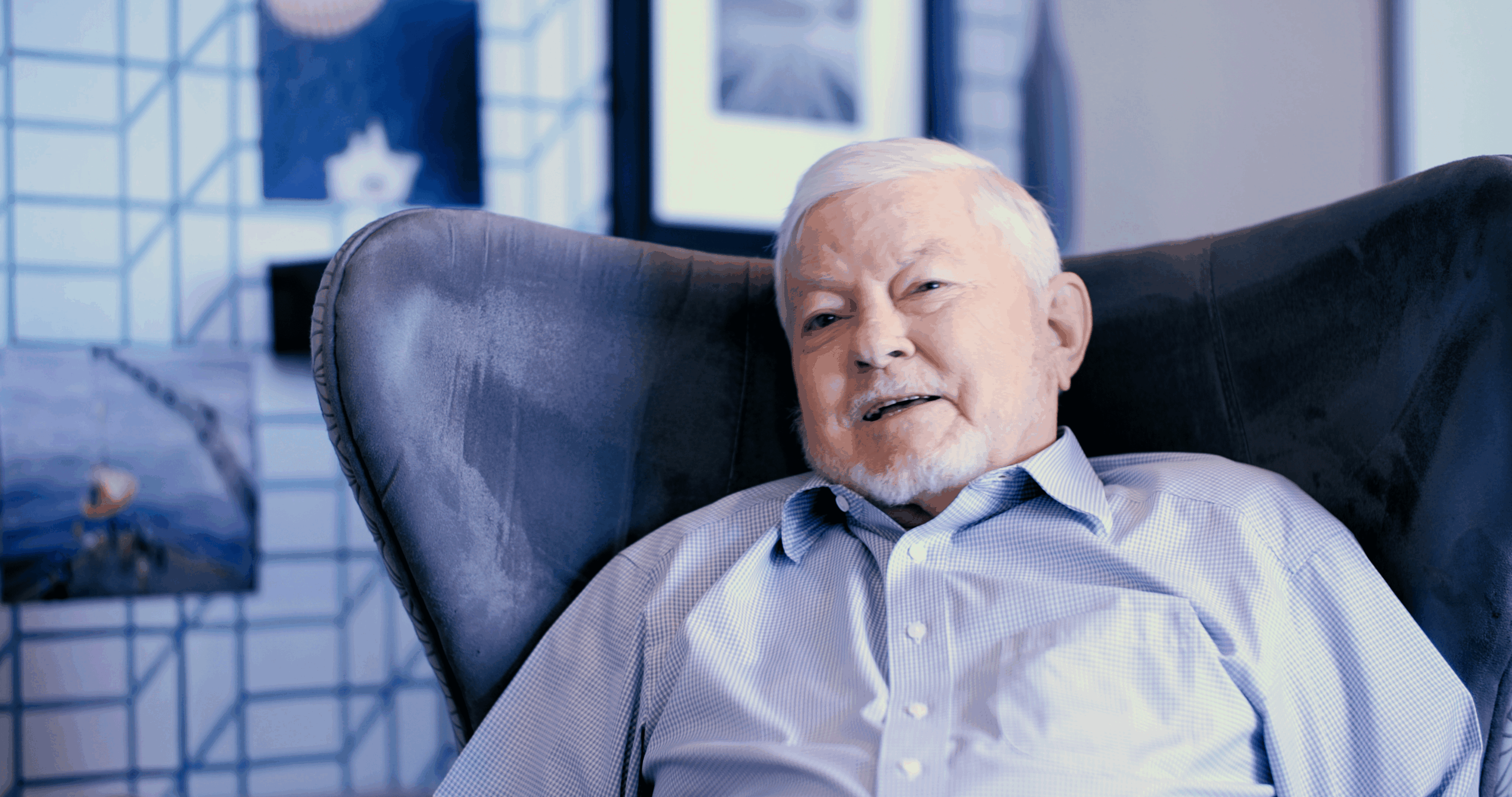
When Joe D. Gamble joined NASA in 1963, the U.S. hadn’t yet reached the Moon—and the space center he was hired to work at didn’t even exist. “When I first entered NASA in 1963,” he said, “we didn’t have Johnson Space Center yet. We were working out of apartments on the Gulf Freeway in Houston. Seeing astronauts and meeting management—it was almost overwhelming.”
Gamble would spend more than 50 years in spaceflight engineering, from Apollo to Orion, shaping the simulations, aerodynamics, and control systems that made America’s spacecraft safe to fly. By the time he retired, he was Chief Engineer for the Assured Crew Return Vehicle (ACRV)—the emergency craft that would one day bring astronauts home from the International Space Station.
From ICBMs to Apollo: The Program That Made the Moon Possible
Before NASA had digital twins or supercomputers, it had GMAS—the Generalized Missile and Spacecraft Simulation program. “It came from the General Electric Missiles and Space Division in Valley Forge, Pennsylvania,” Gamble said. “It was originally built for intercontinental ballistic missiles. But by 1958, GE had offered it to NASA, and it became the backbone for simulating every Apollo mission.”
That Pennsylvania-built code was NASA’s brain before Apollo had a heartbeat. “We used it to plan trajectories, model reentry, even predict what parachutes would do,” he said. “It was amazing what they could fit into 64 kilobytes of memory.”
Despite its complexity, GMAS became an indispensable part of every mission. “Mission planning used it to calculate lunar orbits, engineering used it for design analysis, and I used it for reentry and parachute systems,” Gamble explained. “It was versatile, powerful, and absolutely essential.”

The Art of Simulating Space with 64K of Memory
To younger engineers, 64 kilobytes sounds impossible—but that’s all Apollo’s computers had. “Three or four times a year, I’d spend a few days trying to understand how that program worked,” Gamble admitted. “There was one section of code I never could figure out. But it worked—and we trusted it.”
Every test, from wind tunnels to centrifuges, fed data back into GMAS. “The wind tunnel results gave us aerodynamic models, which we inserted into our simulations,” he said. “The centrifuge data from Warminster, Pennsylvania, helped us estimate what G-forces astronauts would experience—sometimes as high as 16 to 18 Gs. That’s why they needed centrifuge training—to match what we saw in the simulations.”
Contractors and the “Badgeless Society”
Gamble was quick to emphasize how much NASA relied on private industry. “During Apollo, the contractor-to-civil-service ratio was four or five to one,” he said. “At JSC it was closer to two to one. But we worked side by side—often in the same offices.”
That collaboration built the foundation for every major milestone. “GE gave us the simulation tools, Grumman built the Lunar Module, North American (later Rockwell) built the Shuttle,” he recalled. “We engineers at NASA had the same expertise as many of the contractors, and we worked in parallel. That relationship is what made success possible.”
Building the Shuttle: From Wind Tunnels to Simulators
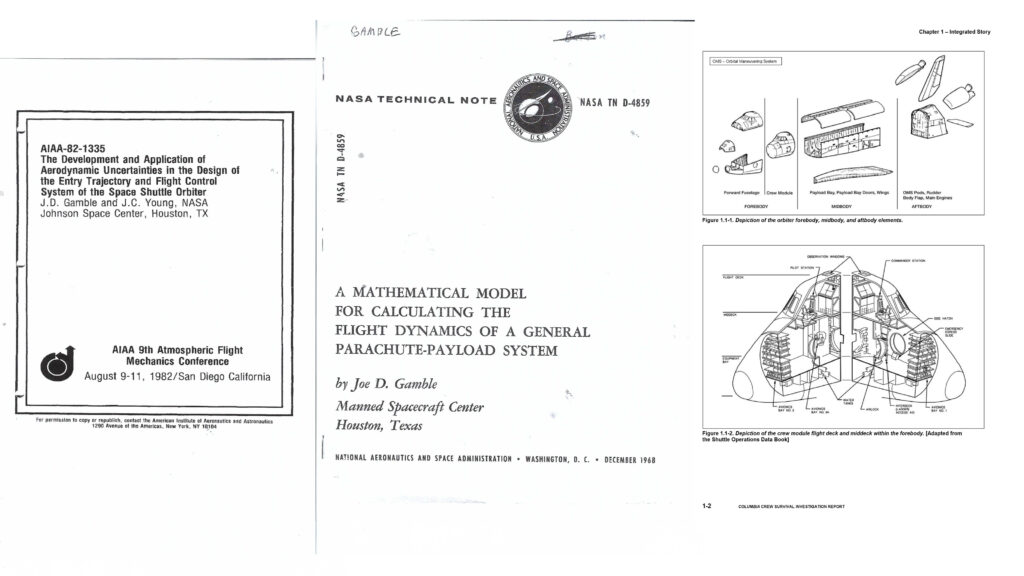
When the Apollo era ended, Gamble transitioned into the Space Shuttle program—where he developed aerodynamic models and control systems for the world’s first reusable spacecraft. “We knew the Shuttle was risky,” he said. “It was the first crewed vehicle ever launched without an uncrewed test flight. That kept us up at night.”
To prepare, Gamble helped create a crude but groundbreaking simulator in Building 5 at Johnson Space Center. “Ken Mattingly and John Young realized the main Shuttle simulator wasn’t ready,” he said. “So we built one ourselves—using leftover Apollo hardware and whatever we could ‘borrow.’ It had a hand controller, real instruments, and a standard government gray chair. But it worked.”
They ran 470 simulated missions—pushing the Shuttle’s guidance and control systems to failure and back again. “We crashed a lot,” Gamble laughed. “But every crash taught us something. Those runs helped us fix weaknesses before the first launch. That crude simulator was absolutely vital.”
“The Smartest, Hardest-Working People I Ever Knew”
Gamble worked closely with the first four Shuttle crews—astronauts John Young, Ken Mattingly, Joe Engle, and Dick Truly. “They were the smartest and hardest-working people I ever knew,” he said. “They understood the data, the aerodynamics, the math. And they cared deeply about getting it right.”
The teamwork went both ways. “John Young used to call me at home when he had questions about flight control,” Gamble said. “We became good friends. When he mentioned our team in his autobiography Forever Young, that was one of the proudest moments of my life.”
The Engineers Behind the Spotlight
For Gamble, the real story of NASA is the story of its engineers. “Most of the publicity goes to the astronauts and the managers,” he said. “But the engineers and scientists behind the scenes—they’re the backbone of everything. Without them, the program wouldn’t exist.”
He smiled recalling one unusual incident in their makeshift simulator: “During a training session, Joe Engle got bitten by a brown recluse spider. It took weeks for the doctors to get him back to flight condition. That tells you the kind of environment we were working in—nothing glamorous, just dedication and risk.”
A Legacy of Simulations and Safety
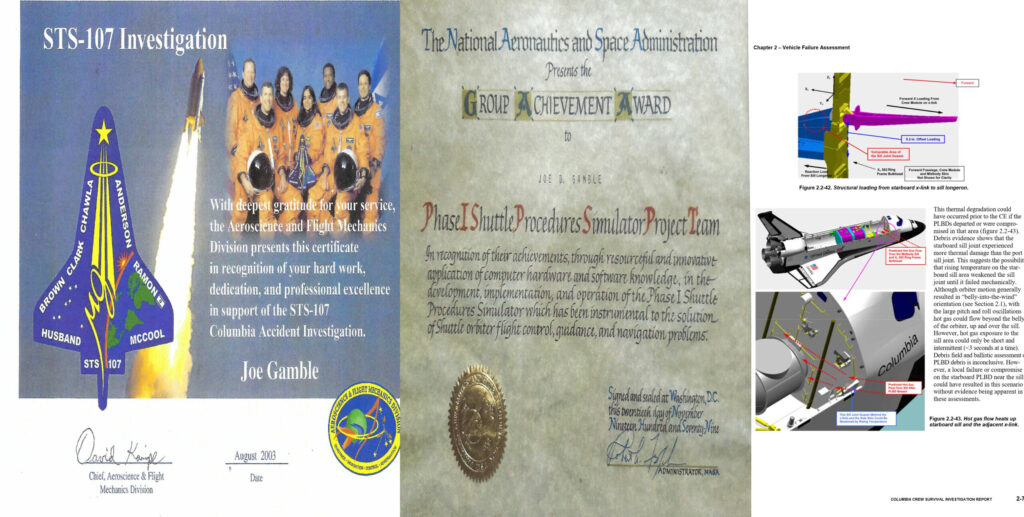
From Apollo to Columbia to Orion, Gamble’s fingerprints are on half a century of human spaceflight. “Simulations were the key,” he said. “They planned the missions, identified problems, and gave crews confidence. Without them, none of this would have been possible.”
Looking back, he’s most proud of the Shuttle years. “Those four years with the first crews were the most enjoyable and important of my career,” he said. “I got to work with brilliant people, make history, and see ideas turn into reality.”
Support the Film
Help us tell the stories of space pioneers like Joe Gamble.
• Visit BeforeTheMoonFilm.com
• Support the film through our donation page
• Follow us on Facebook: facebook.com/BeforeTheMoonFilm
Because before we go forward… we need to remember who got us here.
Leave a Reply