
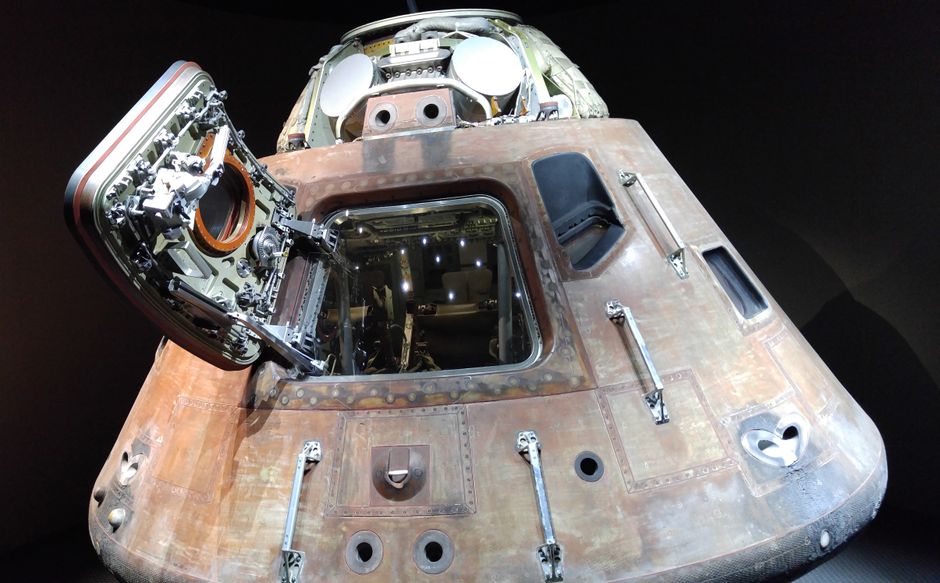
Why Apollo Needed Real‑Time Data: The Mission‑Critical Problem
When Apollo 11 lifted off, the crew’s survival hinged on a constant stream of numbers: cabin pressure, engine thrust, trajectory angles, and the health of the guidance computer. There was no onboard computer powerful enough to make all those decisions autonomously, so every ounce of telemetry had to be beamed back to Earth in seconds. A single missed data point could mean the difference between a safe lunar orbit and a fatal abort.
Early spacecraft such as Mercury relied on brief voice check‑ins and low‑rate data dumps. By the time NASA set its sights on a lunar landing, the problem had grown: a 100‑kilogram command module, a massive Saturn V launch, and a three‑day coast required continuous monitoring of hundreds of analog channels. The solution was to turn the entire planet into a giant receiver‑transmitter pair.
Designing the Global Telemetry Backbone: From Goldstone to Honeysuckle Creek
The network that emerged was a constellation of ground stations strategically placed to keep the spacecraft in line‑of‑sight at all times. Goldstone (California), Canberra (Australia), and Madrid (Spain) formed the core “Deep Space Network” triangle, while smaller sites like Honeysuckle Creek in Australia and the Australian Tidbinbilla complex provided redundancy for lunar‑orbit passes.
Engineers faced hard trade‑offs: larger dish antennas collected weaker signals but cost millions and required massive concrete foundations; smaller dishes were cheaper but needed higher transmit power from the spacecraft. Bandwidth was another constraint—S‑band (2.2 GHz) offered a sweet spot between atmospheric attenuation and antenna size, but each kilobit per second consumed valuable power on the Apollo vehicle.
Redundancy was non‑negotiable. A single storm over the Pacific could blackout one node, so the network was designed so that at any moment at least two stations could see the spacecraft. This overlap proved decisive during Apollo 13, when the crew’s crippled service module needed constant health checks as they looped around the Moon.
The Nuts‑and‑Bolts of 1960s Telemetry: S‑Band Modems, Encoding, and Error‑Correction
Telemetry began as an analog voltage representing a sensor reading. NASA’s engineers built custom S‑band modems that sampled each voltage, converted it to a binary word, and packed the words into a continuous bitstream. The encoding scheme—known as “Manchester”—ensured that a transition occurred every bit, allowing the receiver to stay synchronized even when signal strength faded.
Because the signal traveled 384,000 km to the Moon and back, errors were inevitable. NASA pioneered a form of forward error correction called “convolutional coding,” which added redundant bits so that the ground station could reconstruct corrupted data without requesting a resend—a process that would have taken minutes and been unacceptable for life‑support parameters.
Data rates hovered around 51.2 kbps for Apollo, a figure that seems tiny today but was sufficient to transmit over 100 separate sensor channels, voice, and even a low‑resolution television picture during the lunar descent.
People Behind the Signals: Flight Controllers, Engineers, and the Decision Loop
At Mission Control in Houston, a cadre of specialists turned raw telemetry into actionable information. The flight director oversaw the entire operation, while the CAPCOM (capsule communicator) acted as the astronaut’s voice on Earth. Telemetry engineers monitored the “display and control room” panels, watching for any out‑of‑range flags.
During Apollo 11’s descent, a sudden dip in the LM’s fuel‑cell voltage appeared on the telemetry feed. The guidance officer, seeing the flag, called the flight director, who instructed the crew to adjust the throttle. That split‑second decision, made possible only because the data arrived in real time, kept the LM from a hard landing.
The human‑in‑the‑loop model persisted because the technology of the era could not guarantee autonomous fault detection. Engineers built “alarm thresholds” into the software, but the final judgment always rested with a person who could weigh context, mission constraints, and crew health.
From Apollo to Artemis: The Enduring Legacy of the Telemetry Network
NASA’s modern Deep Space Network (DSN) still uses the same three‑site geometry, now upgraded with 70‑meter dishes and Ka‑band (32 GHz) capabilities that support data rates in the megabits per second range. Laser communication experiments, such as the Lunar Laser Communication Demonstration (LLCD), build directly on the error‑correction algorithms first tested on Apollo’s S‑band links.
Artemis will rely on a hybrid architecture: the legacy DSN for critical command and control, supplemented by the Near‑Earth Network and commercial relay satellites for higher‑bandwidth science payloads. The principle that “you cannot make a decision without data” remains unchanged, and the engineering discipline of building redundancy, robust encoding, and global coverage is still the backbone of every deep‑space mission.
For readers who want to dig deeper, NASA’s historical archives (see Before the Moon) host original telemetry schematics, and the Smithsonian’s National Air and Space Museum displays a restored Apollo S‑band modem.
Leave a Reply