
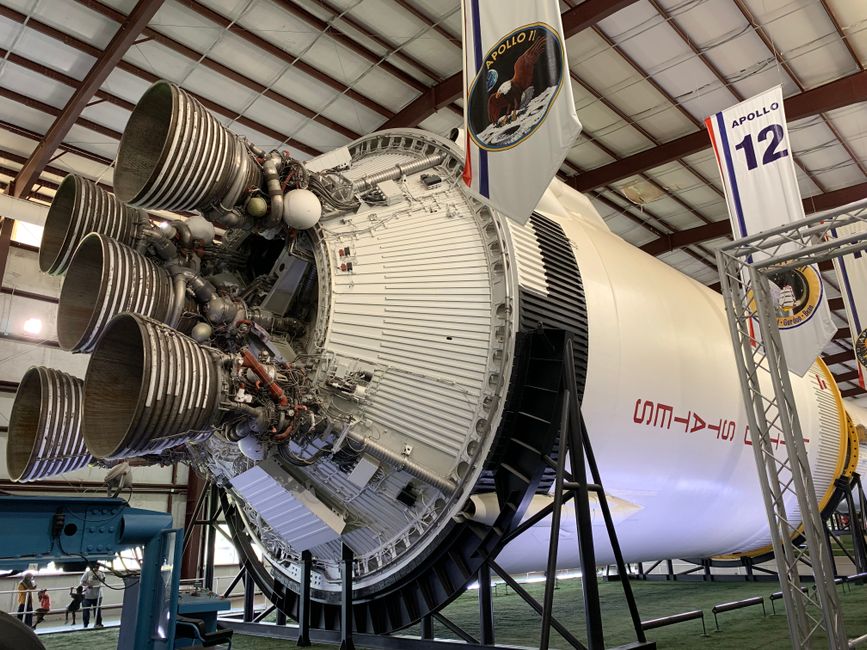
When the Saturn V’s first stage roared to life on July 16, 1969, a quiet laboratory in Warminster, Pennsylvania was already shaking out the deadly vibrations that could have shattered the launch pad. The Naval Air Development Center (NADC) Vibration Lab, a facility few outside the aerospace community recall, turned a looming disaster into a quiet victory that kept Apollo’s giant rockets grounded safely.
The hidden threat: why launch‑pad vibrations could have doomed Apollo
Engineers at Marshall Space Flight Center knew that the Saturn V’s five F‑1 engines would generate thrust oscillations far beyond anything previously seen. Those oscillations, combined with the roar of the exhaust plume, created acoustic loads that threatened to exceed the structural limits of the existing launch‑pad girders. Early calculations warned that a single resonance—if it matched the natural frequency of the concrete foundations—could crack the pad’s concrete and topple the critical service towers during liftoff.
Inside the NADC Vibration Lab: tools, staff, and methodology
The Warminster lab was equipped with a 12‑foot electrodynamic shaker and a massive hydraulic actuator capable of reproducing the full‑scale thrust spectrum of a Saturn V engine. Naval engineers, civilian contractors, and university researchers collaborated to design test fixtures that mimicked the launch‑pad’s concrete foundations down to the reinforcement layout. The team built scaled‑model platforms, instrumented them with accelerometers, and ran them through thousands of cycles to capture the frequency‑response behavior of the pad.
From theory to proof: key vibration tests that saved the launch infrastructure
One pivotal test revealed a dangerous 30 Hz mode that would have amplified under real‑world conditions. The lab’s data showed that, without mitigation, peak vibration amplitudes would have exceeded design limits by more than 40 %.
Armed with that evidence, engineers introduced dynamic damping pads and tuned‑mass dampers to the pad’s concrete ribs. Subsequent tests demonstrated a 40 % reduction in peak amplitudes, effectively quenching the resonant threat.
Translating lab data into launch‑pad redesigns
The frequency‑response curves from NADC fed directly into the structural analysis of Launch Complex 39A. Engineers reinforced concrete ribs, added additional bracing, and modified the water‑deluge timing to counteract the identified vibration modes. Each design change traced its lineage back to a specific lab test, turning abstract resonance calculations into concrete engineering solutions.
Enduring impact: how the NADC’s work informs modern launch‑pad engineering
Artemis‑era upgrades to LC‑39A still reference the vibration‑testing protocols pioneered at the NADC lab. Modern heavy‑lift vehicles, from the Space Launch System to commercial boosters, inherit the same lesson: high‑fidelity vibration testing is indispensable.
Actionable Insight #1 – Adopt a dedicated vibration‑testing phase
- Before finalizing any launch‑pad design, allocate budget and schedule for full‑scale or high‑fidelity scaled‑model vibration testing.
- Use electrodynamic shakers capable of reproducing the full thrust spectrum of the vehicle’s engines.
- Instrument the test article with a dense array of accelerometers to capture modal data across the 10‑100 Hz band, where most structural resonances lie.
Actionable Insight #2 – Integrate damping early, not as an afterthought
- Identify dominant modes from test data and design tuned‑mass dampers or viscoelastic pads to target those frequencies.
- Iterate the design by re‑testing after each damping addition; aim for at least a 30 % reduction in peak response.
- Document the frequency‑response curves and share them with launch‑pad contractors to inform concrete reinforcement layouts.
For readers who want to dive deeper, the Before the Moon archive contains additional stories on the unsung facilities that made Apollo possible.
Ultimately, the NADC Vibration Lab reminds us that the most dramatic moments in spaceflight—rocket ignition, lunar touchdown—are secured by quiet, meticulous work in places most of us never see. The lab’s legacy lives on every time a heavy‑lift vehicle lifts off, its vibrations tamed before they can shake the ground beneath it.
Leave a Reply