
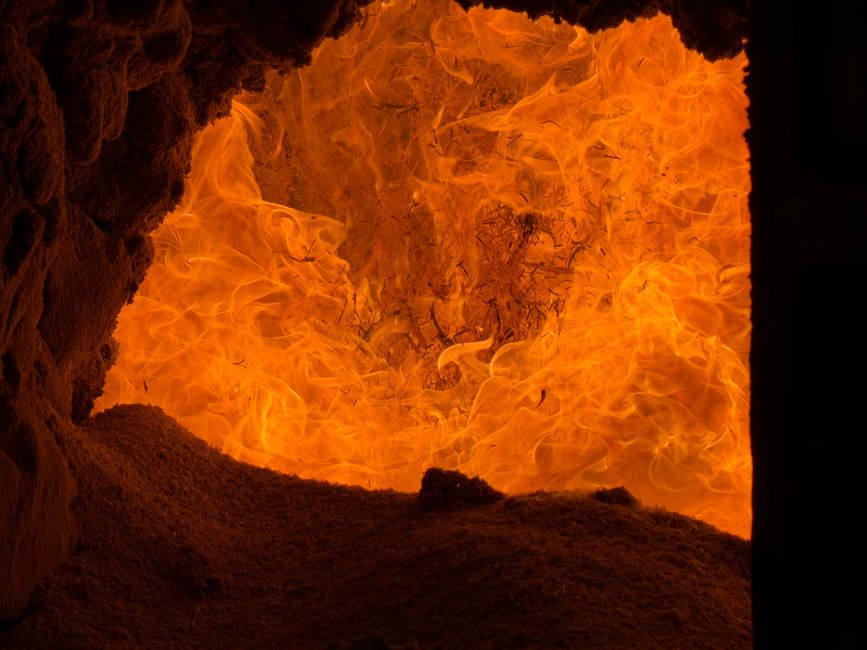
The Re‑Entry Threat: Why Apollo needed a revolutionary heat shield
When the command module sliced through Earth’s atmosphere at Mach 25, the leading edge of the capsule faced a fleeting inferno hotter than the surface of the Sun—over 5,000 °F. At those temperatures, any conventional metal or ceramic would vaporize in seconds, turning a triumphant lunar return into a catastrophic loss. NASA’s safety analyses identified the heat shield as the single point of failure for the entire Apollo program. Without a proven way to bleed off that heat, the crew’s fate was sealed before the parachutes even opened.
Langley’s Heat Shield Lab: People, facilities, and the birth of ablative testing
In the early 1960s a modest team of materials scientists, aerodynamicists, and test engineers assembled in a converted hangar at Langley’s Aeronautical Research Center. The effort was coordinated by the Langley Heat‑Shield Project Office, which pooled expertise from the Materials Division and the Aerodynamics Branch. Their flagship asset was an arc‑jet furnace capable of delivering 5,000 °F heat fluxes while a high‑speed wind tunnel simulated the hypersonic flow over a re‑entering capsule. The lab’s isolation—far from the public eye of Cape Canaveral—allowed engineers to iterate rapidly without the pressure of launch schedules.
From Theory to Fire: Designing and validating the ablative material
The team’s first breakthrough came from a thermochemical model that predicted how a carbon‑based matrix, impregnated with phenolic resin, would behave under extreme heating. The resulting material—later classified as a phenolic‑impregnated carbon ablator (PICA) variant—was not a novel invention but a refined formulation of existing ablatives used on ballistic missiles. Full‑scale coupon tests in the arc‑jet showed that the material charred in a controlled fashion, shedding mass and carrying away heat while the underlying structure stayed below 1,500 °F, well within the thermal limits of the aluminum alloy frame.
Integrating the Shield into the Command Module: Engineering challenges and solutions
Turning a laboratory coupon into a 12‑foot‑diameter heat shield required three engineering leaps.
- Lightweight honeycomb backing. To avoid a mass penalty, structural engineers designed a carbon‑filled honeycomb sandwich that bonded the ablative tiles with a high‑temperature epoxy. The honeycomb absorbed the mechanical loads of launch and re‑entry while adding only 120 kg to the capsule.
- Embedded instrumentation. For the first time, Langley technicians installed an array of Type‑K thermocouples beneath the ablative surface. The data stream fed directly into Mission Control’s telemetry, giving flight directors real‑time temperature gradients and a safety margin that could be adjusted on the fly.
- Modular tile layout. Rather than a monolithic slab, the shield was tiled in a staggered pattern. If a single tile failed, the surrounding tiles would still protect the vehicle, providing a built‑in redundancy that later designers copied for Orion and commercial crew capsules.
These solutions were codified in a set of design guidelines that Langley distributed to contractors across the United States, ensuring that every Apollo command module left the factory with an identical, flight‑proven shield.
Legacy and Lessons: How Langley’s work informs modern re‑entry vehicles
The ablative concepts pioneered at Langley did not die with Apollo. NASA’s Orion capsule uses an evolved PICA‑X material that traces its lineage directly to the 1960s testing rigs. Commercial providers such as SpaceX and Boeing also rely on arc‑jet facilities that are direct descendants of Langley’s original furnace, now upgraded with laser‑based diagnostics for even finer heat‑flux mapping.
Three practical takeaways continue to shape heat‑shield programs today:
- Validate with full‑scale arc‑jet testing. Small‑scale lab tests are useful, but only a full‑scale exposure can reveal edge effects, tile interaction, and real‑time ablation rates.
- Embed telemetry at the material level. Real‑time temperature data allows mission controllers to make informed abort decisions, a practice born in the Apollo era that remains standard for crewed re‑entry.
- Design for modular redundancy. Staggered tile patterns and honeycomb backings provide fail‑safe margins without prohibitive mass penalties.
When Artemis crews next plunge through Earth’s atmosphere, the quiet work done in Langley’s secret lab will be the invisible safety net that carries them home.
Leave a Reply