
One Small Step… for a Camera?
When Neil Armstrong descended the ladder of the Lunar Module and made that legendary first step on the Moon, millions of people watched it live on television. The image of Armstrong’s boot touching lunar dust is one of the most iconic in human history.
But few people ever ask:
Who built the technology that made that broadcast possible?
The story of lunar television is not a simple one. It involves multiple companies, evolving technology, and some of the most difficult engineering challenges of the space age.
RCA Was Part of the Story, But Not the Whole Story
In the Apollo program, multiple companies contributed to the television systems that would bring the Moon into living rooms around the world.
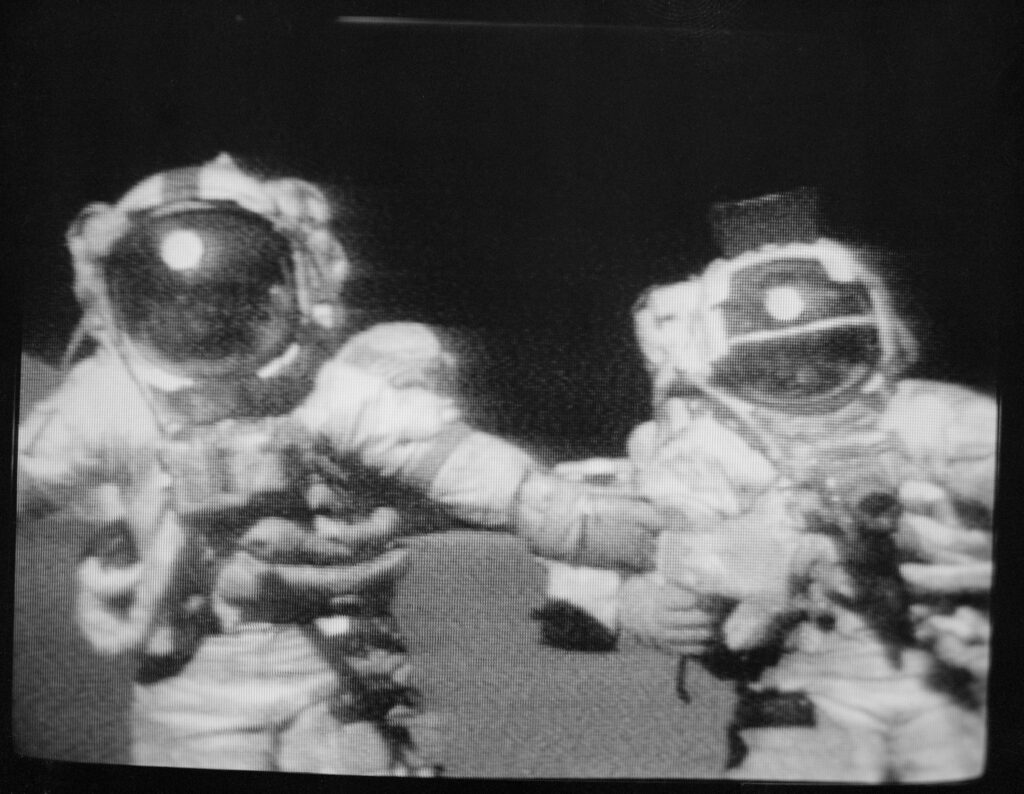
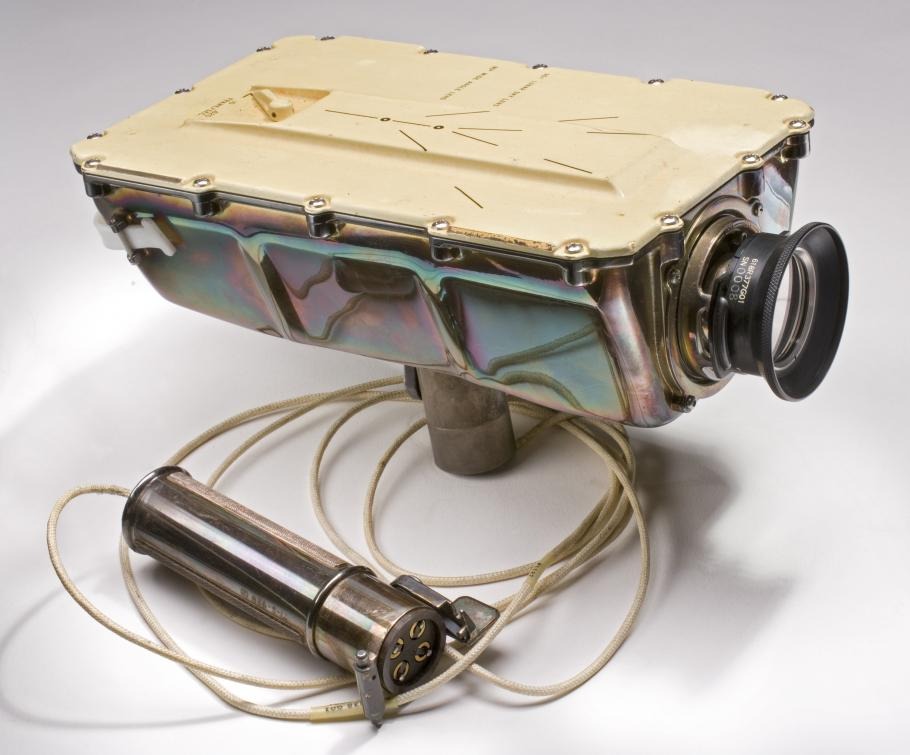
Westinghouse Electric Corporation built the television camera that first transmitted images from the lunar surface during Apollo 11. That black-and-white camera was designed to operate in extreme lunar conditions, weighing just a few pounds and able to function in vacuum, extreme temperatures, and under limited power. It sent a slow-scan television (SSTV) signal back to Earth, where ground stations converted it to broadcast standard for live television worldwide.
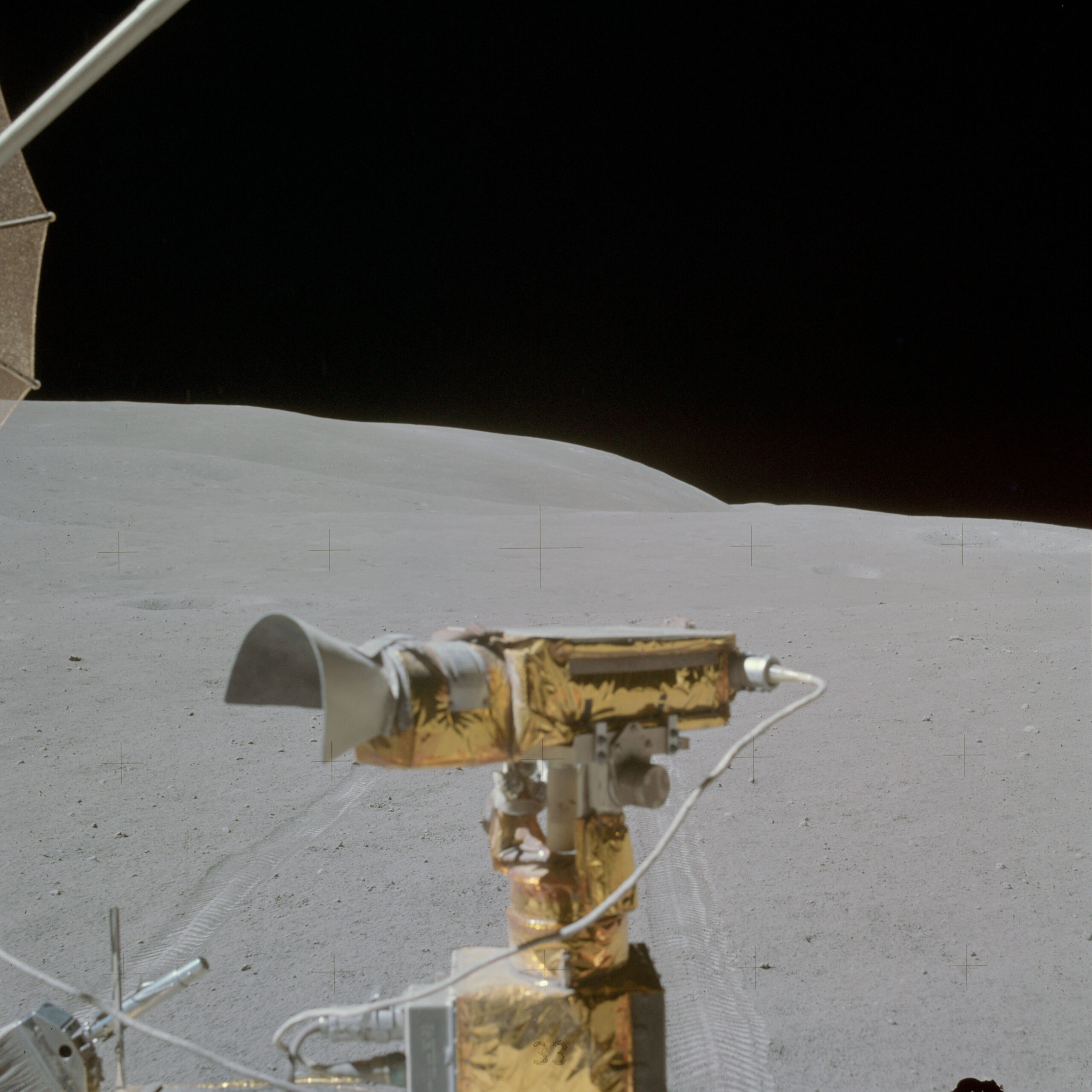
RCA also played a significant role in lunar television and space imaging systems. NASA awarded RCA contracts to develop television cameras and signal processing equipment used in other parts of Apollo and its follow-on surface exploration missions. This included slow-scan black-and-white cameras used in early command module missions and later the color cameras and television assemblies used on lunar rovers during Apollo 15, 16, and 17. These RCA systems used field-sequential color with silicon intensifier target (SIT) tubes, offering improved image quality and rugged performance.
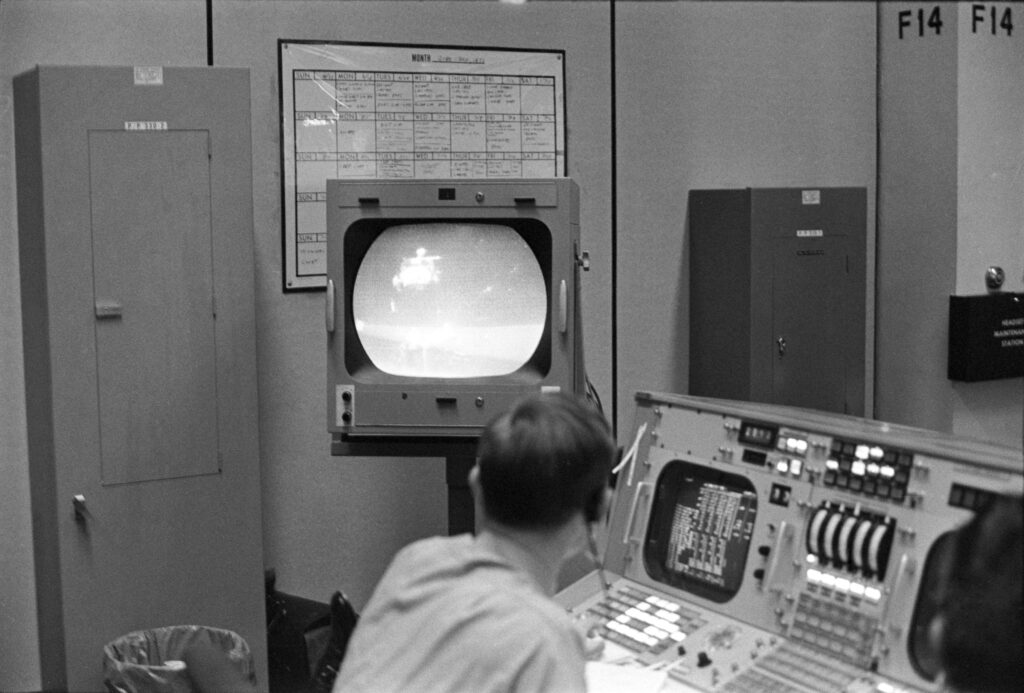
RCA’s expertise also extended to the scan conversion systems on Earth that took the slow-scan lunar signals and made them compatible with the then-standard broadcast format. Without these systems, the lunar telecasts could not have been reliably viewed on commercial television sets during the missions.
A Complex Technical Challenge
Transmitting live video from the Moon in the 1960s was not like pointing a phone camera at a subject and streaming it online. Engineers had to overcome a series of profound challenges:
• The limited power and weight capacity of the Lunar Module and equipment on the Moon.
• The Moon’s stark lighting conditions, with deep shadows and bright highlights that could overwhelm electronic sensors.
• The absence of existing infrastructure for deep-space video relay.
• The need to transmit signals across 240,000 miles of empty space, into ground stations around the world.
The early Apollo television cameras used a slow-scan format at 10 frames per second with reduced resolution, due to bandwidth constraints. Ground stations such as Goldstone processed the received signal in real time, converting it to the North American broadcast standard of 30 frames per second so that audiences could see the live images.
Later missions added more advanced television systems, including color cameras mounted on the Lunar Roving Vehicle that could be commanded from Earth, offering pan, tilt, and zoom control. These systems provided some of the richest lunar surface visuals seen during the Apollo program.
It Wasn’t Just Video Technology
The broader Apollo communications and telemetry systems were a complex network of hardware and software that went far beyond cameras. They included biomedical sensors to monitor astronaut health and transmit vital data to Mission Control, radio systems for maintaining voice communications, and data links for navigation and spacecraft systems. RCA and other contractors contributed to many of these subsystems.
Why This Matters
The image of man walking on the Moon is inseparable from the technology that brought it into view in homes across the planet. It was not the work of a single company or location, but a distributed effort involving industry leaders, government laboratories, and broadcasting infrastructure around the globe.
What is often overlooked is how this work drew on regional industry and innovation. Facilities in New Jersey and beyond contributed engineering talent, prototype systems, and signal processing innovations that made deep space broadcasts possible.
This history challenges the tendency to view space milestones as the product of a single place or institution. Behind every iconic shot from space was a network of engineers, factories, and innovations that deserve recognition.
Key Takeaways
• Westinghouse built the camera that first transmitted live television from the lunar surface during Apollo 11.
• RCA developed television cameras and signal processing systems used across multiple Apollo missions, including later lunar surface color cameras.
• Apollo video signals used slow-scan formats that required real-time conversion before broadcast.
• These systems operated under severe constraints of weight, power, environment, and bandwidth.
• The successful broadcast of the Moon landing was the result of broad collaboration across industry and government.
The Silent Partners of Space
In Before the Moon, we explore the overlooked engineers, hometown factories, and hidden labs that helped make space history. The story of lunar television is just one of many that reveals how distributed innovation made human spaceflight possible.
Learn more at BeforeTheMoonFilm.com
Follow the project for research and discoveries
Support preservation efforts connected to space heritage
Some of the most important advances in spaceflight were made long before rockets left the ground.

Leave a Reply