
The Hidden Threat: Why Space Radiation Became a Mission‑Critical Problem
When the Saturn V roared toward the Moon in 1969, engineers already knew three invisible hazards would follow the spacecraft: solar particle events, galactic cosmic rays, and the Earth’s trapped‑belt particles. Each can slam a crew with ionizing energy that damages DNA, degrades electronics, and erodes spacecraft materials. Early mission planners had only sparse data from high‑altitude balloon flights and the few manned Earth‑orbit missions, so they turned radiation from a background curiosity into a hard design driver.
Apollo’s First Experiments: From Geiger‑Müller Tubes to the Command Module’s Passive Shield
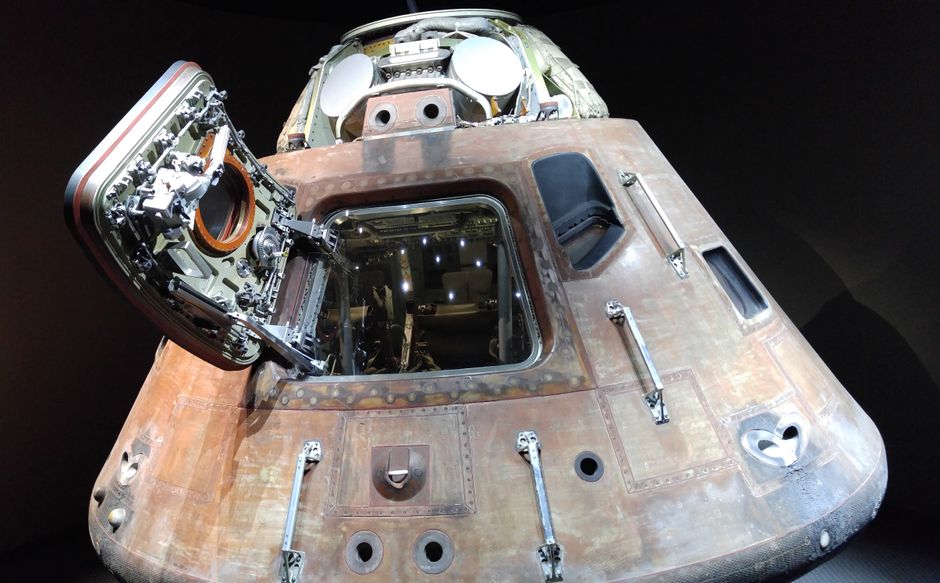
On Apollo 15‑17 the crew carried a suite of radiation detectors nicknamed “the dosimeter package.” The heart of the system were Geiger‑Müller tubes mounted inside the command module’s cabin, linked to a tissue‑equivalent ion chamber that mimics human organ response. Engineers at NASA’s Langley Research Center calibrated each tube against known sources, then logged dose‑rate readings every 15 seconds.
The data revealed an average deep‑space dose of about 1.6 rad per day, with spikes up to 10 rad during solar particle events. Those numbers validated the command‑module’s 2‑centimeter aluminum skin as a modest but effective barrier, and they prompted a redesign of the extravehicular‑activity (EVA) suit’s outer layers, adding Mylar and a thin polyethylene liner to attenuate high‑energy protons.
Engineering the Shield: How NASA’s Early Designs Informed Modern Habitat Protection
Aluminum, Mylar, and polyethylene became the “radiation‑shielding trio” for the 1970s. Ground‑based tests at the Naval Air Development Center’s centrifuge in Johnsville, Pennsylvania, simulated lunar‑gravity loads while bombarding material samples with proton beams. Those experiments proved that low‑Z polymers like polyethylene could slow down heavy ions more efficiently than metal alone.
The results fed directly into the design of the Skylab and later the International Space Station’s habitat modules. Even today, NASA’s Lunar Habitat concepts still reference the same material matrix, layering aluminum for structural strength and polyethylene‑rich water tanks for dose reduction.
Artemis Safeguards: Real‑Time Monitoring, Wearable Dosimeters, and Adaptive Shielding
Fast forward to Artemis I and the Orion crew module. The spacecraft now carries a Radiation Assessment Detector (RAD) that measures both charged particles and neutrons, delivering dose‑rate updates to flight controllers in near real time. On the astronaut’s wrist, a new personal dosimeter suite—based on the same tissue‑equivalent principle but miniaturized for EVA—streams cumulative exposure to the onboard health‑risk model.
Beyond passive protection, Artemis engineers are testing deployable water walls that can be positioned around a lunar habitat when a solar event is forecast. Experiments on the International Space Station have shown that a 10‑centimeter water shield can cut dose rates by up to 60 percent, a direct evolution of the polyethylene water tanks used on Skylab.
Magnetic deflection concepts, still in the laboratory, aim to create a localized “mini‑magnetosphere” around a habitat. Those ideas trace their lineage to Apollo’s early magnetic‑field experiments on the lunar surface, where astronauts briefly powered a small magnet to observe particle trajectories.
What the Past Teaches Today: Risk Management, Human Factors, and the Path to a Sustainable Lunar Presence
The Apollo data‑driven workflow—measure, model, mitigate—has been codified into NASA’s Human Research Program. Flight surgeons now run the same Monte‑Carlo simulations that Langley engineers ran in the 1970s, but with far richer input: real‑time RAD data, individual astronaut genetics, and predictive solar‑weather models from NOAA.
Because the risk model is now a living dashboard, mission planners can make “go/no‑go” calls for EVA based on actual dose forecasts rather than worst‑case assumptions. That flexibility is essential for the Artemis III lunar landing, where astronauts will spend up to 12 hours on the surface during a period of heightened solar activity.
Ultimately, the legacy of Apollo’s humble Geiger tubes is a culture of continuous radiation vigilance. As Artemis moves from test flights to permanent lunar outposts, the same engineers who soldered a tube onto a circuit board in 1969 are seeing their principles amplified by AI‑driven health analytics and adaptive shielding. The lesson is clear: without precise monitoring, the invisible threat can become mission‑ending.
Leave a Reply