
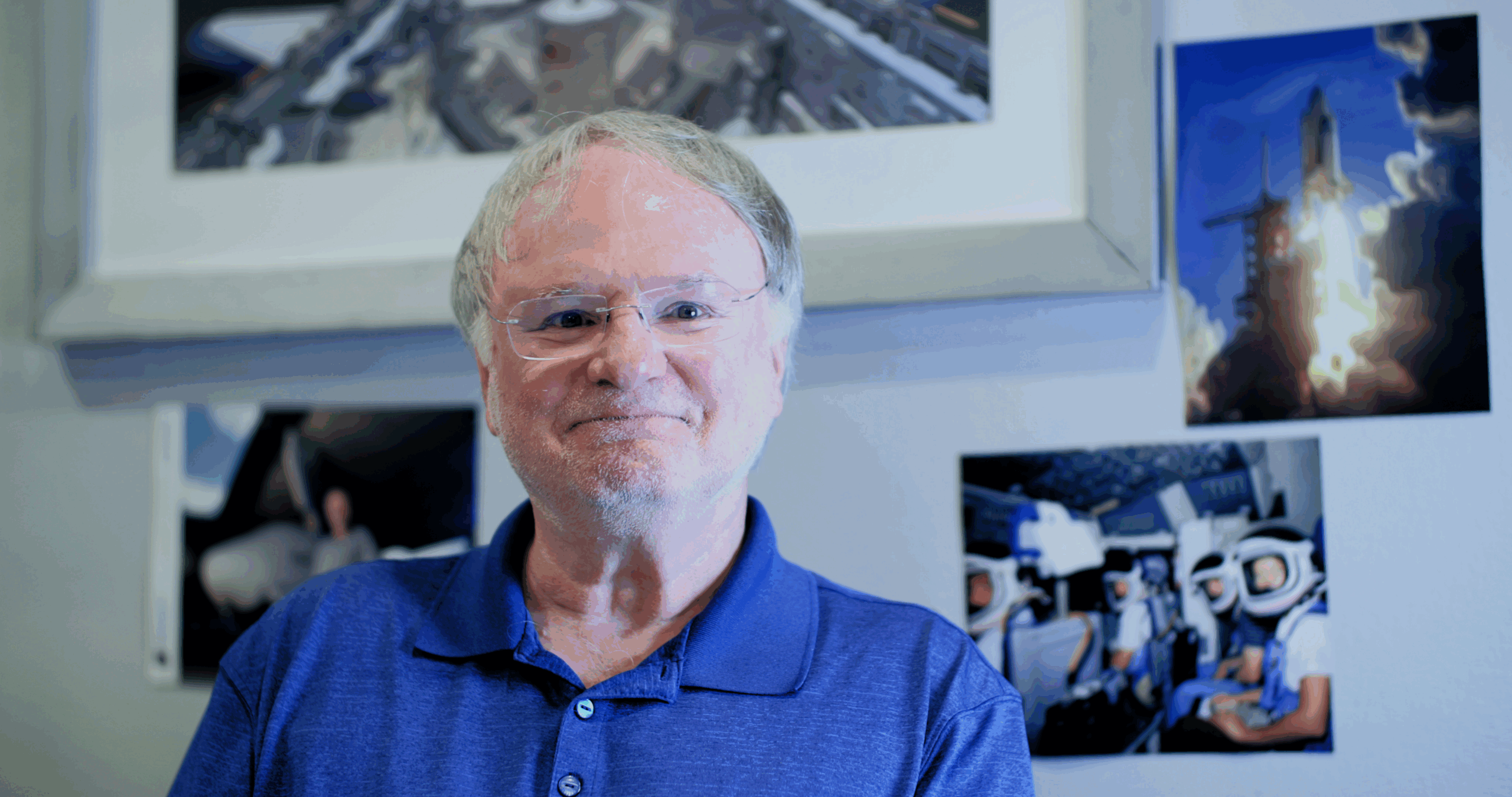
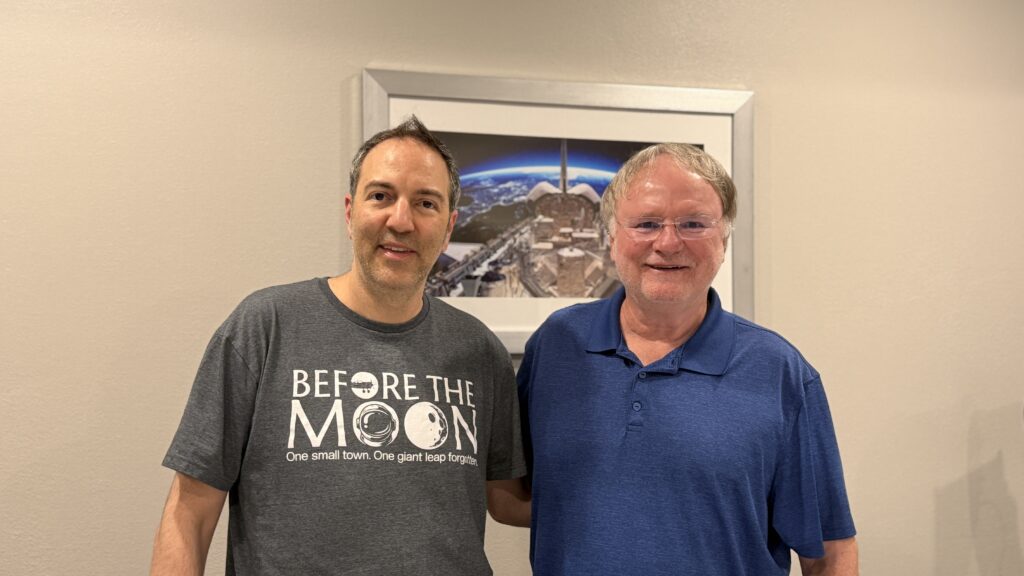
Long before the roar of the Shuttle’s engines filled the Texas sky, a young boy in Mississippi was standing on a dirt road, staring up at a moving star. “It was one of the early NASA satellites,” Stokes McMillan recalled. “I watched it glide across the sky, silent and bright. From that moment on, I knew I wanted to be part of space.”
That dream carried him all the way to Johnson Space Center, where McMillan became a Shuttle Simulation Supervisor – known by his team as “SimSup.” For decades, he trained astronauts to handle malfunctions, master procedures, and adapt in real time. The simulations he oversaw weren’t just rehearsals, they were crucibles where safety, ingenuity, and teamwork were forged.
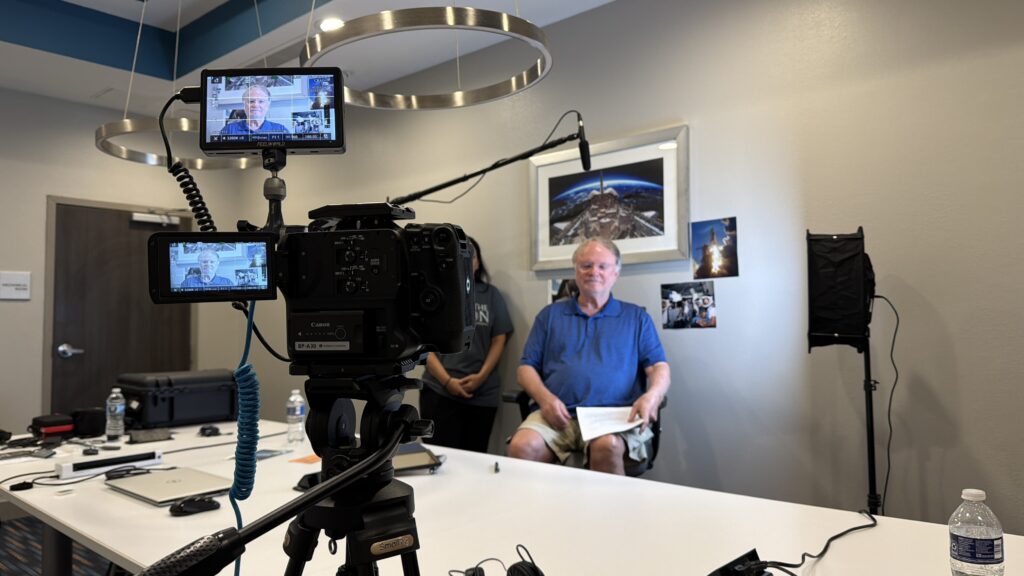
The Transition from Apollo to Shuttle
“The Apollo era was about getting to the Moon,” McMillan said. “The Shuttle era was about getting there, coming back, and doing it again. We had to train crews to fix problems on orbit, because the vehicle had to fly again.”
That shift, from one-shot exploration to reusable spacecraft, transformed NASA’s culture. “We didn’t have a single goal like the Moon. We were building the Space Station,” he explained. “Everything was about learning to reuse, to sustain, to make spaceflight normal.”
Training Astronauts to Think on Their Feet
McMillan and his team designed simulations that tested every limit. “We’d start with a script,” he laughed, “but it always went off-script. You had to be fast and creative – thinking on your feet was everything.”
The astronauts, he said, were as human as they were heroic. “They joked, they laughed, and they made mistakes. Joe Engle would roll the Shuttle during reentry training, just for fun. John Young once told me, ‘One doesn’t stand by when traveling at five and a half miles per second.’”
What impressed McMillan most wasn’t their bravery, but their discipline. “They did everything slowly and precisely. They never rushed. Even under pressure, they followed the checklist. That’s how you survive in space.”
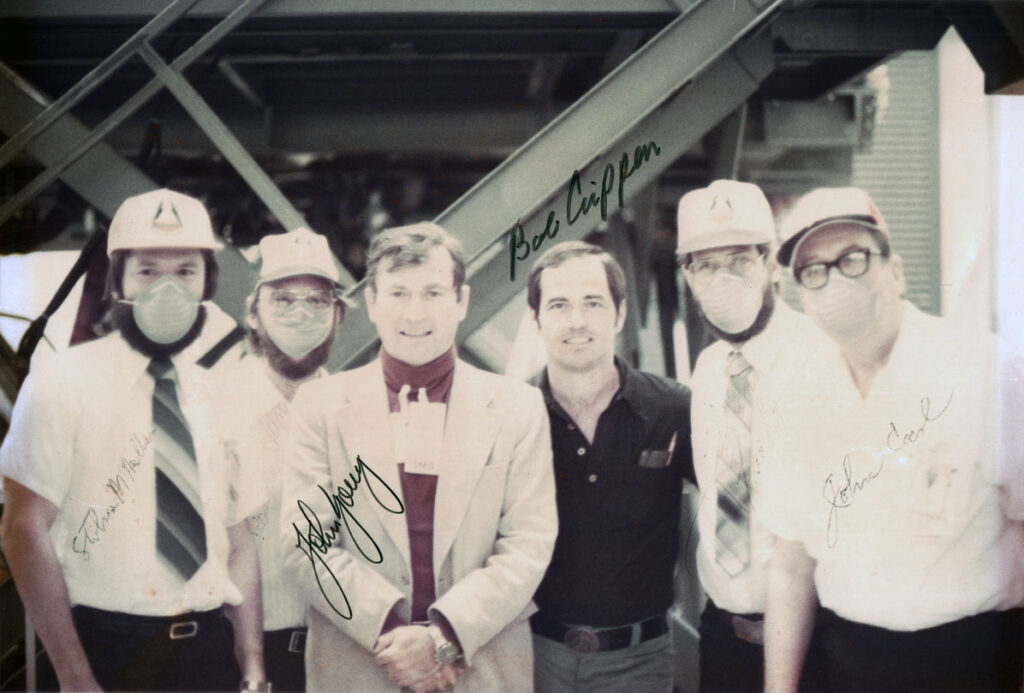
The Human Limits Behind Engineering Decisions
Training wasn’t just for the astronauts – it shaped engineering itself. “We learned what worked and what didn’t in the simulators,” he said. “Every time a procedure failed, we rewrote it. The simulations improved the flight procedures that actually flew.”
McMillan also emphasized how centrifuge research from earlier facilities, like Warminster’s Johnsville Centrifuge, directly influenced Shuttle design. “In Apollo, reentry meant eight Gs on the body,” he said. “The Shuttle was designed to limit it to three, because we knew from centrifuge testing how difficult high Gs were for humans to handle.”
A Badgeless Society: NASA and Its Contractors
One of the most striking things about McMillan’s recollections is his view of teamwork. “At JSC, there were more contractors than civil servants,” he said. “We called it a ‘badgeless society’ – you couldn’t tell who worked for NASA or Rockwell just by talking to them. We all did the same job.”
He points to the Lavelle Aircraft Corporation of Newtown, Pennsylvania, as an example. “Lavelle built the lithium hydroxide canister that saved the Apollo 13 crew,” he said. “That’s what the contractor ecosystem was – thousands of brilliant people solving problems together.”
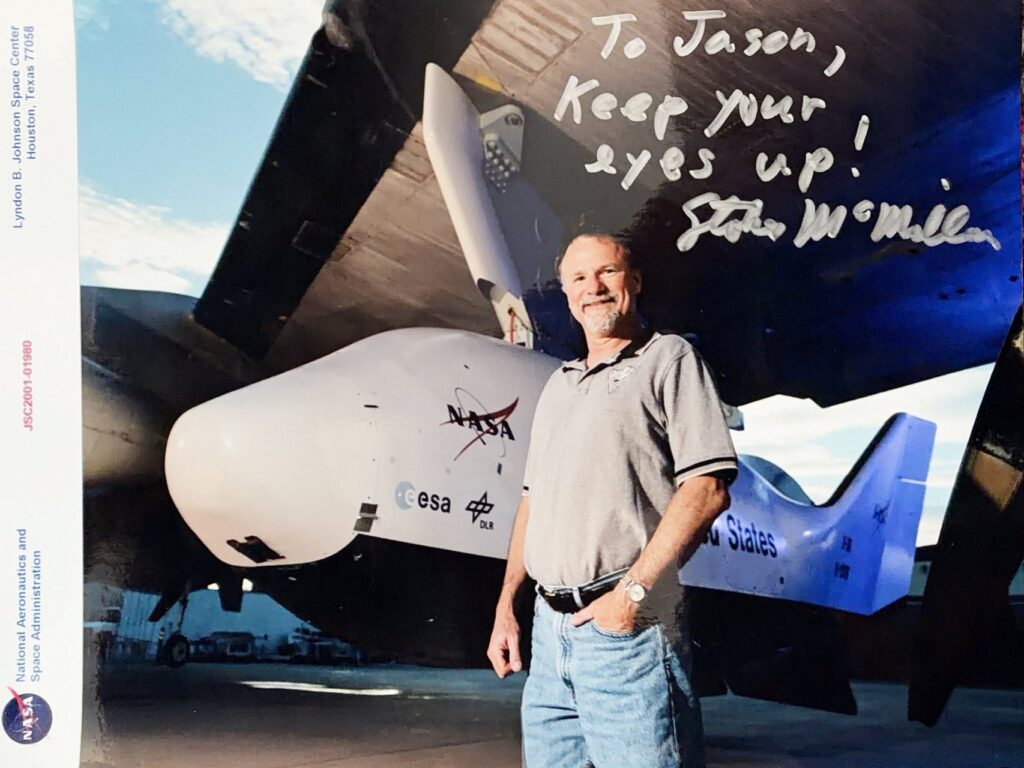
The Humanity of Heroes
For all the technology and tension, McMillan’s fondest memories are human ones. “People think astronauts are superhuman,” he said. “But they fail. They mess up. And that’s how they learn. They’re just people, with kids in Little League, with dogs, with regular lives. That’s what makes them extraordinary.”
He smiled recalling one personal connection that still amazes him: “Dick Truly’s great-grandchildren are my grandchildren,” he said. “My son married his granddaughter. That’s how close this community is. NASA is a family – sometimes literally.”
Why “Before The Moon” Matters
McMillan sees Before The Moon as a chance to honor the people behind the missions. “For every one star in spaceflight, there are a thousand people behind them,” he said. “I hope this film shows their stories, the engineers, the trainers, the techs, because without them, we’d never have reached the stars.”
As a retired NASA veteran and active member of the NASA Alumni League, he still shares his passion for space with students. “We’re still in the early stages of mankind going into space,” he said. “We need the next generation to study STEM, to become the explorers who take us to Mars – and beyond.”
Support the Film
Help us tell the stories of space pioneers like Stokes McMillan.
• Visit BeforeTheMoonFilm.com
• Support the film through our donation page
• Follow us on Facebook: facebook.com/BeforeTheMoonFilm
Because before we go forward… we need to remember who got us here.


Leave a Reply