
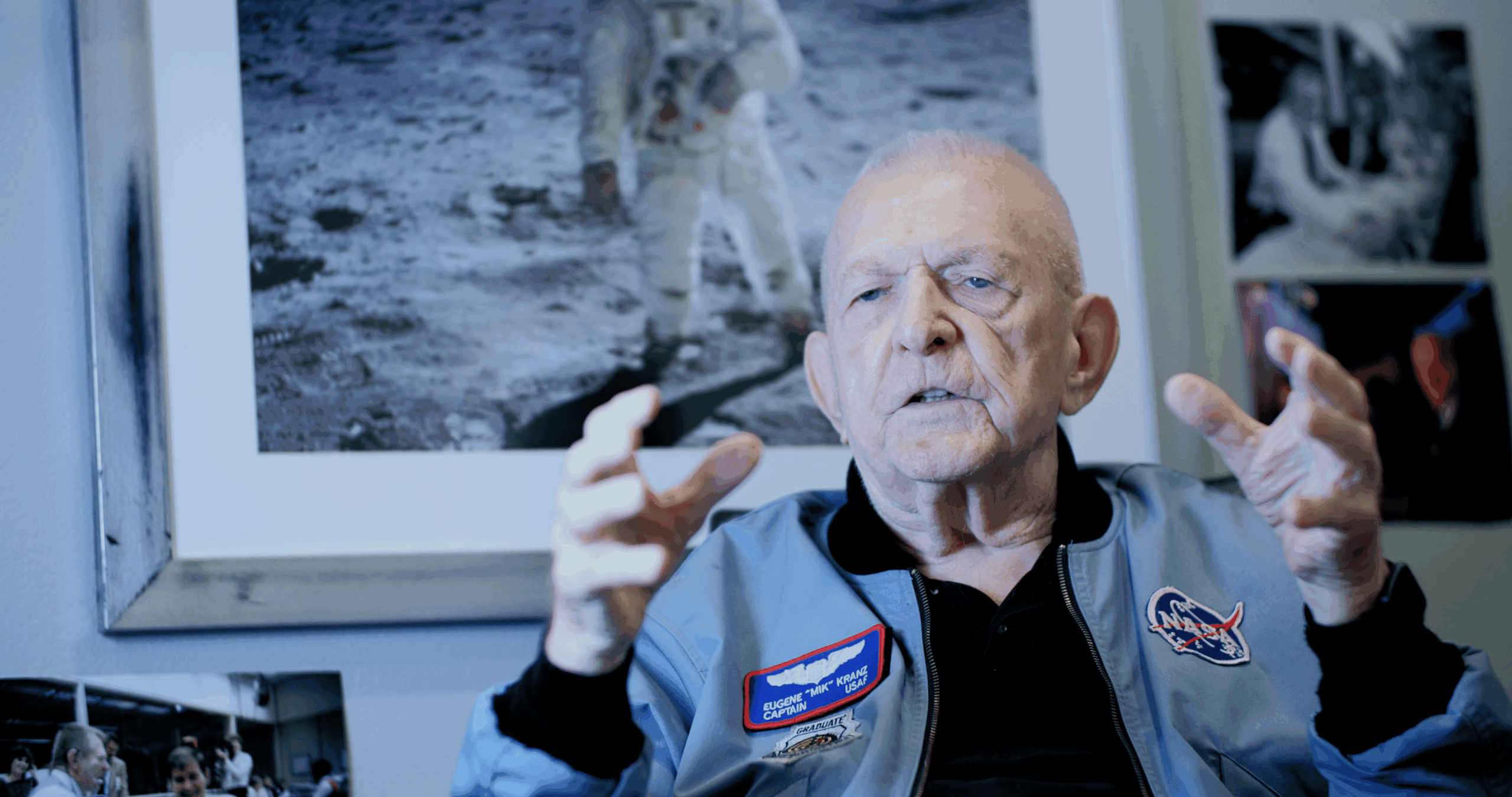
Few figures in NASA’s history embody the courage, discipline, and leadership of America’s space age like Gene Kranz—the legendary Apollo Flight Director whose white vest became a symbol of cool resolve under pressure. From the Mercury missions to Apollo 13, Kranz didn’t just manage flights; he built the culture that made them possible.
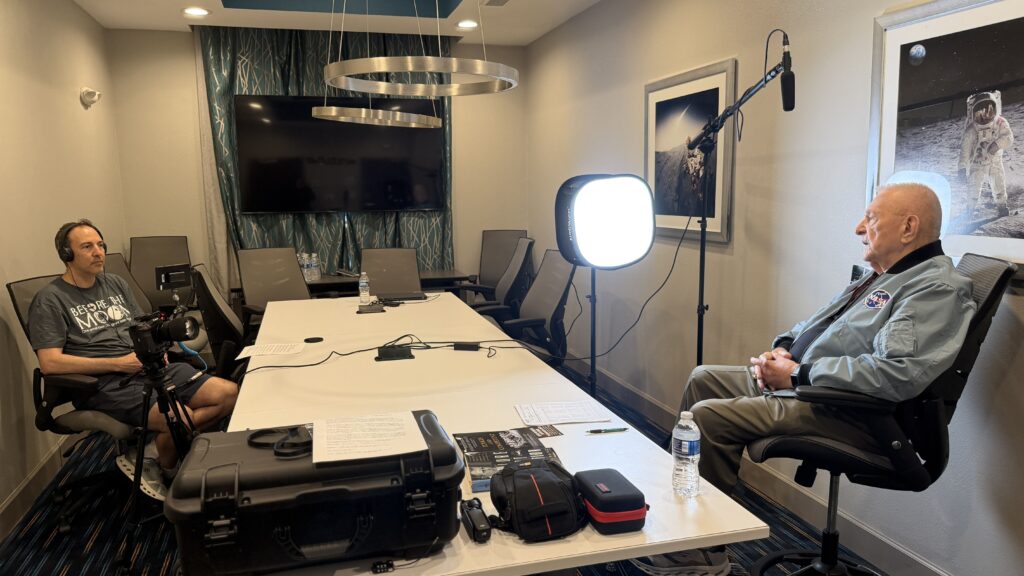
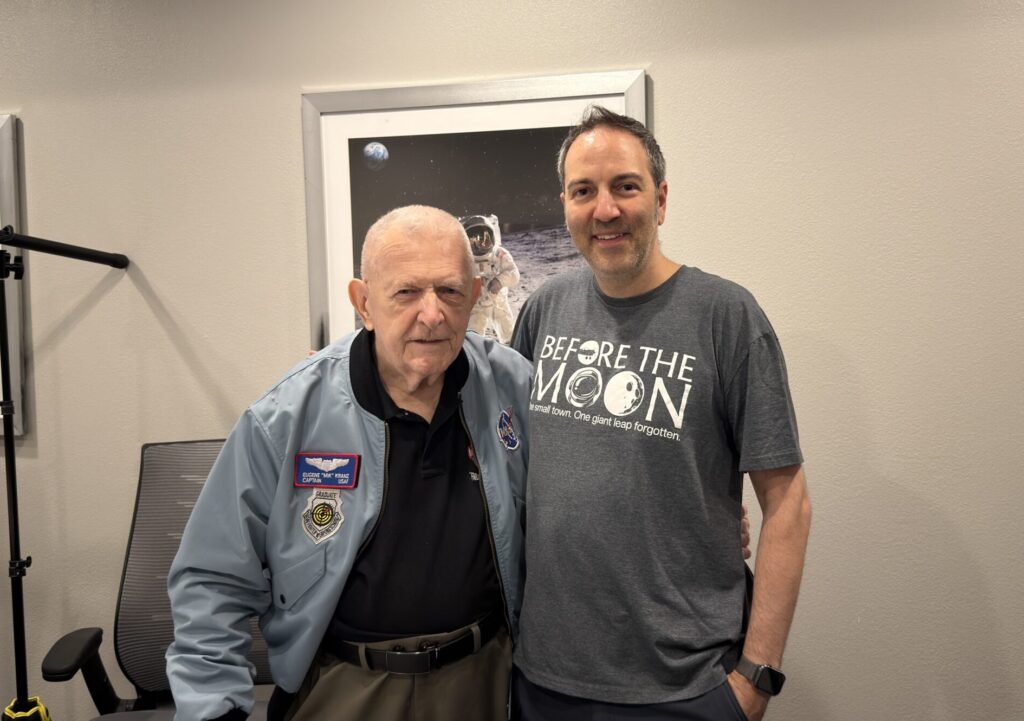
When I sat down with Kranz in Houston for Before The Moon, he began not with rockets, but with roots.
“I started as a fighter pilot over Korea,” he said. “Then two and a half years as a flight test engineer on the B-52. I was looking for the next challenge—and that turned out to be the NASA Space Task Group. I arrived just about six months after the first astronauts.”
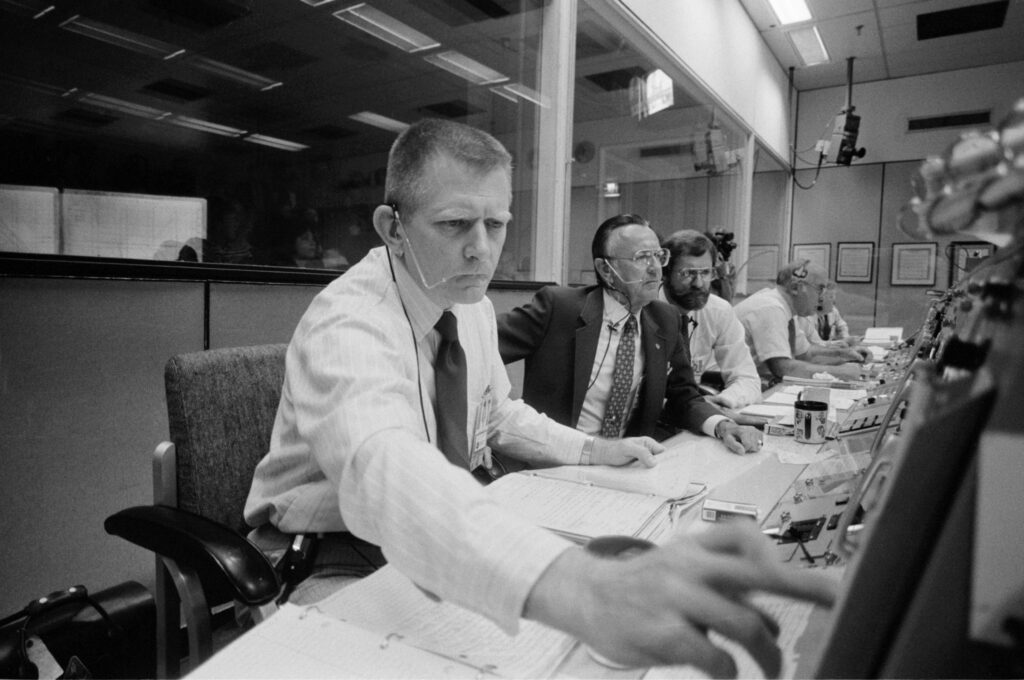
The Birth of Mission Control
In those early days, there was no blueprint for mission control. “The greatest challenge,” Kranz said, “was communicating across a worldwide network. We had cables across the Atlantic and Pacific, but from there it was radio—and that was potluck. We could only talk to the spacecraft about every 15 to 20 minutes.”
Mission control wasn’t just technology—it was people. “Most of the controllers were borrowed engineers. They didn’t even know each other’s names,” he recalled. “My job after Mercury was to build the team that would carry us through Gemini and Apollo. I called them ‘hired hands’—they came from everywhere: the military, industry, Philco technicians from the tracking stations. They had to learn to trust each other fast.”
Building a Team in a World Without Precedent
To Kranz, teamwork wasn’t optional—it was survival. “I brought in people who were good at communications, people who could think in seconds, not minutes,” he said. “Ground Control Approach operators, for example—they saved my life twice as a pilot. They could make split-second calls under pressure, and that’s what we needed.”
Out of this crucible came the mission rules—the heart of NASA’s problem-solving culture. “We’d sit in a room—life support, propulsion, navigation—everyone had a different idea,” he said. “Our job was to synthesize those ideas into one decision. That process unified us. It taught us to listen, and to act.”
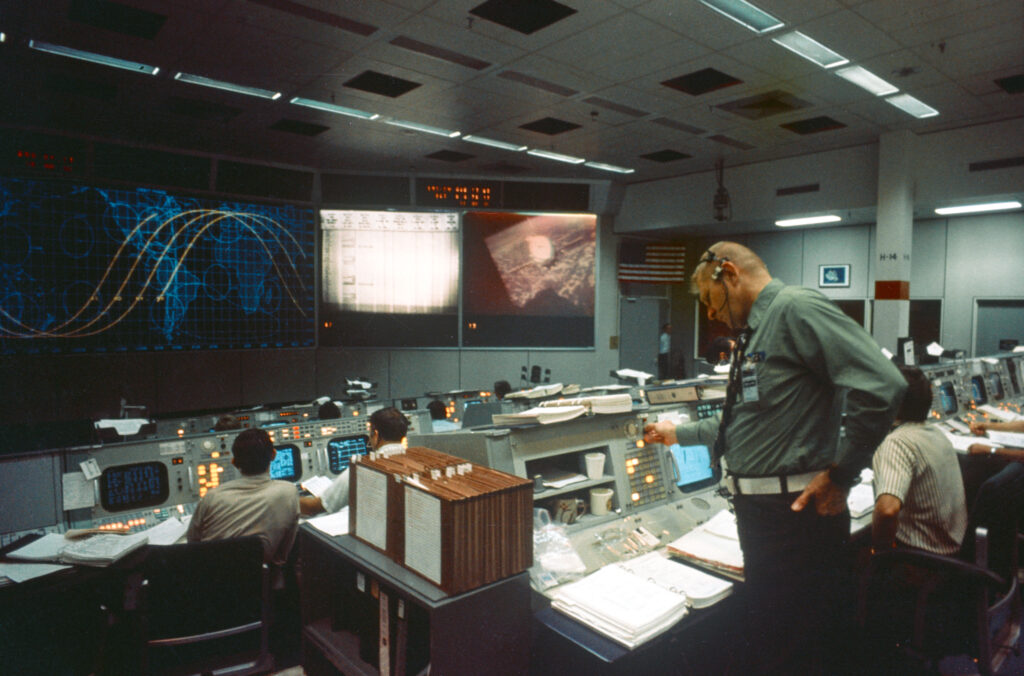
Lessons from Risk, Failure, and Resolve
Kranz’s early flight test work prepared him for spaceflight’s dangers. “We were learning to live with risk,” he said. “In Korea and in test flights, you learned fast—failure meant someone didn’t come home.”
When Apollo 1 ended in tragedy, Kranz didn’t look for excuses. He wrote the words that would define NASA’s character:
“From this day forward, Flight Control will be known by two words: Tough and Competent.”
“Tough means we make a decision when we must,” he explained. “Competent means we never take anything for granted.”
Those words still echo through the agency today. “Every mission is a first mission,” Kranz said. “You approach each one with the same level of professionalism as the first flight you ever made.”
The Cold War and the Race to the Moon
When asked why the U.S. poured so much into the space race, Kranz drew a straight line from the skies over Korea to the launch pads of Cape Kennedy. “Many of us were Cold War warriors,” he said. “We’d seen what Soviet power could do. For others, Kennedy’s words lit the fire: ‘We choose to go to the Moon.’ And then there were the technocrats—the ones who just loved to make new things work.”
Those three groups—warriors, dreamers, and builders—made Apollo possible.

The Moon Landing: A Team’s Defining Moment
When the Eagle descended toward the lunar surface on July 20, 1969, Kranz gathered his young team. “They were in their twenties,” he said. “So I told them: ‘The entire world is watching. From the day you were born, you were meant to be here. I will stand behind every decision you make. We came into this room as a team, and we will leave as a team.’”
One controller, Steve Bales, later said those were the most important words he ever heard. They carried the team through the landing—and into history.
Artemis and the Next Generation
Kranz sees clear parallels between Apollo and Artemis. “Integration is still the biggest challenge—keeping contractors, NASA, and international partners aligned,” he said. “But the spirit is the same. The excitement is the same.”
And for the new explorers, his message remains simple but powerful:
“Dream it. Aim high. Never surrender.”
“As you get closer to your dream,” he said, “move it further out. Always keep growing. Always keep reaching.”
Why Preserving Apollo’s Story Matters
For Kranz, remembering Apollo isn’t nostalgia—it’s necessity. “It was a time when we faced incredible difficulties—technically, politically, personally,” he said. “But with the right team chemistry—socially, politically, organizationally—we proved that as a nation, we can do anything.”
Recently celebrating his 92nd birthday, his eyes still light up when he talks about the people behind the missions. “It’s not about me,” he said. “It’s about the team. The men and women who worked in smoke-filled rooms, who didn’t sleep, who gave everything they had. We built something that lasted.”
Support the Film
Help us tell the stories of space pioneers like Gene Kranz.
• Visit BeforeTheMoonFilm.com
• Support the film through our donation page
• Follow us on Facebook: facebook.com/BeforeTheMoonFilm
Because before we go forward… we need to remember who got us here.
Leave a Reply