
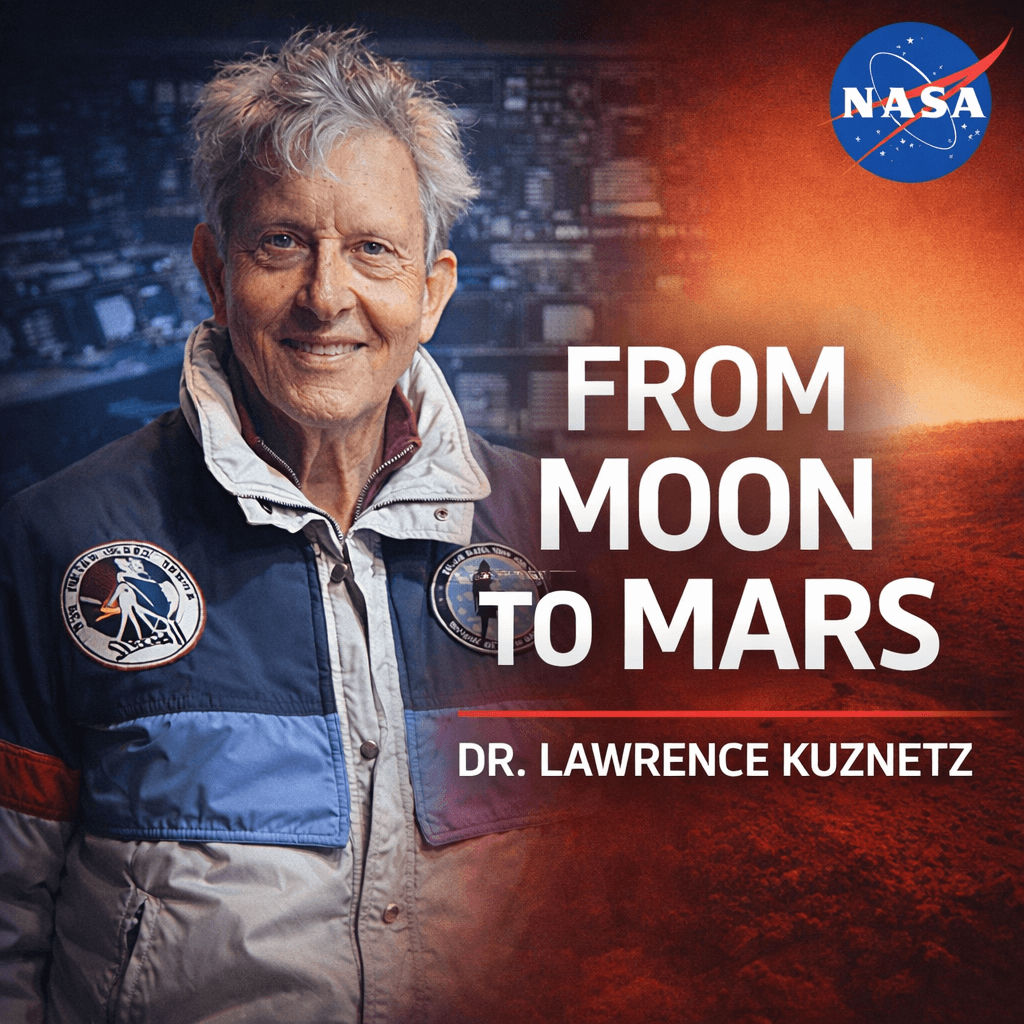
When Apollo 11 touched down on the Moon, millions watched history unfold.
Dr. Lawrence Kuznetz was not watching from home.
He was on console.
He had not expected to be there. When he arrived at NASA in 1967, he was given a problem that did not exist in textbooks. Model the human body inside a spacesuit. Predict how it behaves in space. Determine how much oxygen, cooling, and life support an astronaut will consume in real time.
No one had done it before.
“I hadn’t done any of that stuff in college,” he said. “I really had to feel my way around.”
His early work began with a simple mathematical model. Two nodes. Then eight. Then sixteen. Eventually forty one. Each refinement brought NASA closer to answering a question no one could afford to guess at:
How long can a human survive out there?
Waiting for the Numbers
NASA had its hierarchies. The main Mission Control room was staffed by career console operators. Specialists like Kuznetz usually supported from back rooms.
But as Apollo 11 approached, NASA needed something new. They needed real time prediction of consumable usage during moonwalks. Oxygen. Cooling water. Suit performance. Metabolic rate.
Kuznetz’s model outperformed the one NASA had been using in a head to head test inside the massive vacuum chamber facility at Johnson Space Center. The result was rare.
He was placed on console.
When Eagle descended, Mission Control was structured and disciplined, but the landing itself was, in his words, “bare knuckles.” Alarms sounded. The landing site shifted. Neil Armstrong took manual control.
Kuznetz waited.
He could not begin his work until the astronauts exited the Lunar Module and activated their suits. Telemetry began flowing. Heart rate. Oxygen consumption. Skin temperature. Liquid cooling garment data.
Five people worked together to translate that stream of numbers into one critical calculation:
How hard are they working? And how much time do they have left?
“Life support does not allow guesswork,” he explained. “You have to know how fast you’re using the fuel.”
There was no time to reflect on history. Only numbers.
From the Moon to Columbia
Most engineers never physically touch the spacecraft they help design. Apollo was historic, but distant. Kuznetz’s work lived inside equations and consoles.
The Space Shuttle changed that.
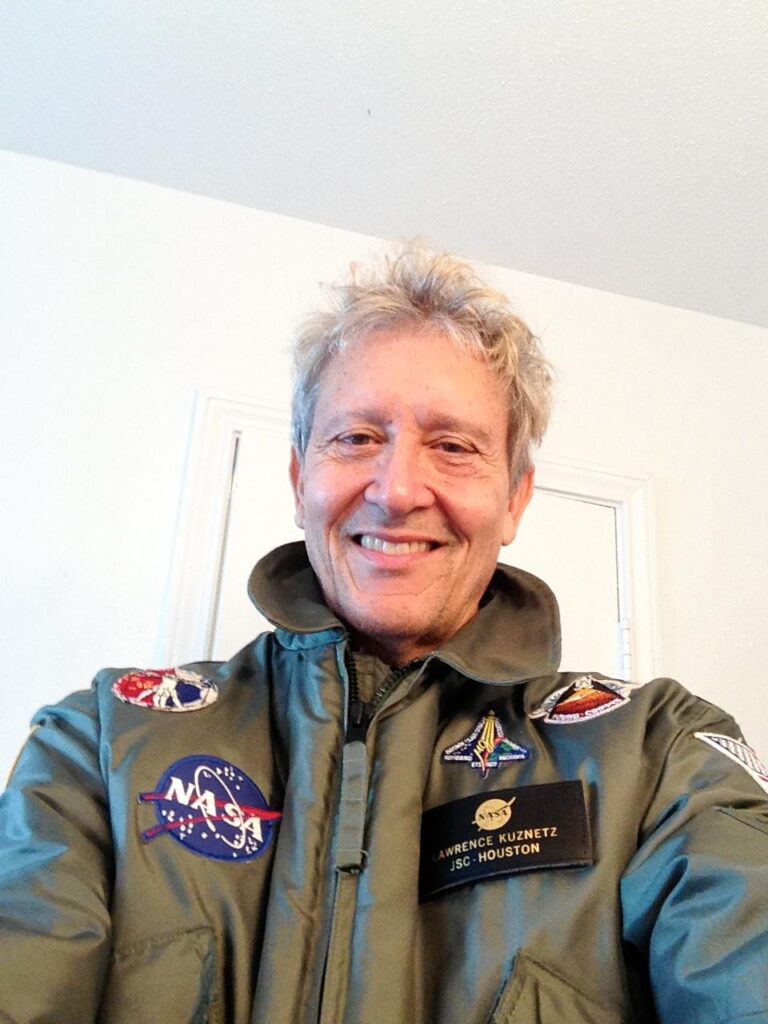
When he transferred to Kennedy Space Center to help build Columbia, the experience was different. The program was behind schedule. Over budget. Politically fragile. Five management structures overlapped. Thousands of unique heat shield tiles covered the orbiter, each with its own lifespan.
At first, the Shuttle did not inspire confidence. It felt chaotic.
But then came rollout night.
He walked into the processing facility and, for the first time, saw Columbia fully assembled, gleaming under lights before being towed to the Vehicle Assembly Building.
“That’s when you really know what you’re part of,” he said.
Apollo was history. Columbia was tangible.
Lessons from Triumph and Tragedy
The Shuttle era brought both remarkable achievement and devastating loss.
Kuznetz is direct about it. Challenger and Columbia were not inevitable. They were preventable. Arrogance, normalization of risk, and management failures played roles that engineering alone could not fix.
At the same time, the Shuttle underscored something essential for the future: reusability.
Even with its flaws, the Shuttle proved that spacecraft could launch, land, and fly again. That principle now drives modern programs.
The ride home, he noted, was also transformative. Unlike splashdowns in rough seas, Shuttle crews returned to Earth like aircraft, controlled and precise. It redefined what recovery could look like.
The Human System
After Shuttle, Kuznetz became Flight Projects Manager for Human Life Sciences aboard the International Space Station.
His focus shifted from launch and landing to survival and adaptation.
Cardiovascular systems. Bone loss. Immune response. Fluid balance. Neurovestibular function.
Forty six experiments in orbit. Many more on the ground.
Despite decades of effort, he believes we still understand less than we should about long duration human spaceflight. Most countermeasures rely heavily on exercise. Microgravity remains a profound physiological stressor.
Which raises the next question.
What happens when humans live on Mars?
Why Mars Is Different
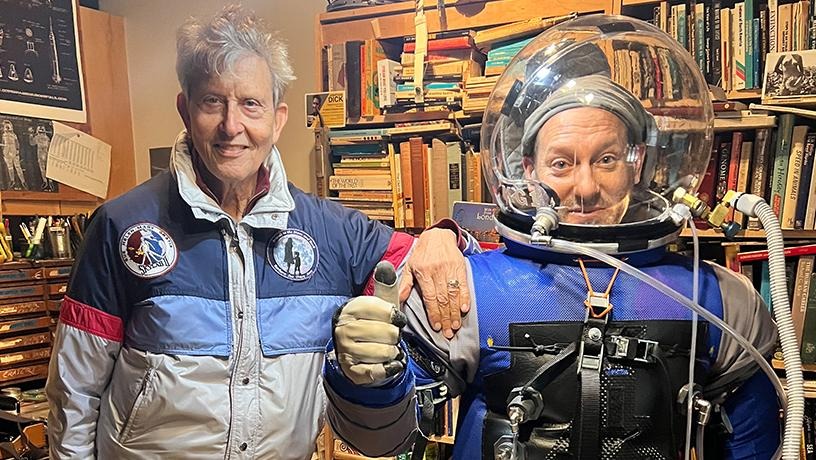
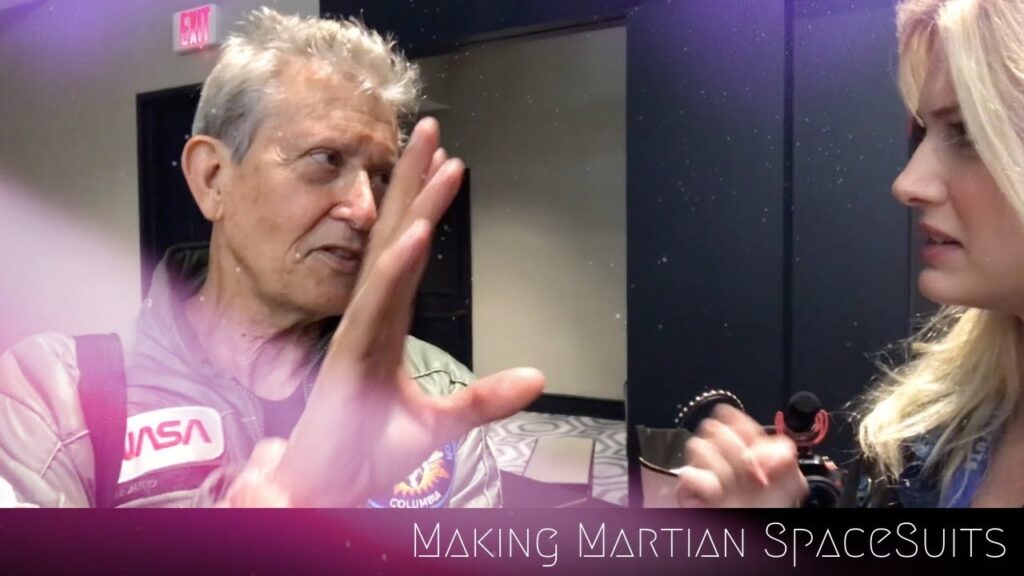
Kuznetz is currently working on next generation spacesuit technology designed specifically for Mars.
The suits used on the Moon and in low Earth orbit will not work there.
Mars has gravity, though only about thirty eight percent of Earth’s. It has dust. A thin atmosphere. Long mission durations. Crews will remain on the surface for over five hundred days due to orbital mechanics.
“You can’t just go for thirty days and come home,” he said.
He argues that Antarctica may be a better analog for Mars than the Moon. Isolation, duration, and psychological strain mirror the Martian challenge more closely than brief lunar missions.
He is candid about NASA’s shifting risk tolerance. Early programs accepted danger openly. Today’s caution reflects both wisdom and hesitation.
“NASA is a place where dangerous things are done to expensive people,” he said.
Exploration carries risk. Avoiding it entirely means not going.
A Confluence That May Never Repeat
Why did Apollo succeed when Mars remains distant?
Kuznetz describes it as a rare convergence. Cold War urgency. Political commitment. Industrial mobilization. A president who believed in the mission. Public momentum.
Four hundred thousand people working toward one objective.
Since then, programs have started and stopped. Mars architectures drafted and discarded. Political cycles interrupt continuity.
“We all expected to be on Mars within ten years of Apollo,” he said. “We had the means to do it.”
What faded was sustained commitment.
Passion as Fuel
For Kuznetz, the motivation remains simple.
Passion.
He has been driven by space exploration since he was ten years old. He teaches because he believes curiosity does not need to be manufactured. Kids already understand the pull of Mars.
There are practical reasons to explore. Scientific discovery. Technological advancement. Even planetary backup in a fragile world.
But there is also something deeper.
“We do these things because they’re hard,” he said, echoing Kennedy. “Not because they’re easy.”
You either feel it, or you don’t.
For Dr. Lawrence Kuznetz, that feeling carried him from Apollo 11 to Columbia to the ISS and now toward Mars.
And the next chapter is still being written.
Watch the Video here:
Listen to the Podcast here:
Support the Film
Help us tell the stories of space pioneers like Dr. Lawrence Kuznetz.
• Visit BeforeTheMoonFilm.com
• Support the film through our donation page
• Follow us on Facebook: facebook.com/BeforeTheMoonFilm
Because before we go forward… we need to remember who got us here.
Leave a Reply