
From Typist to Trailblazer: Estella Gillette and the Women Behind NASA’s Early Missions
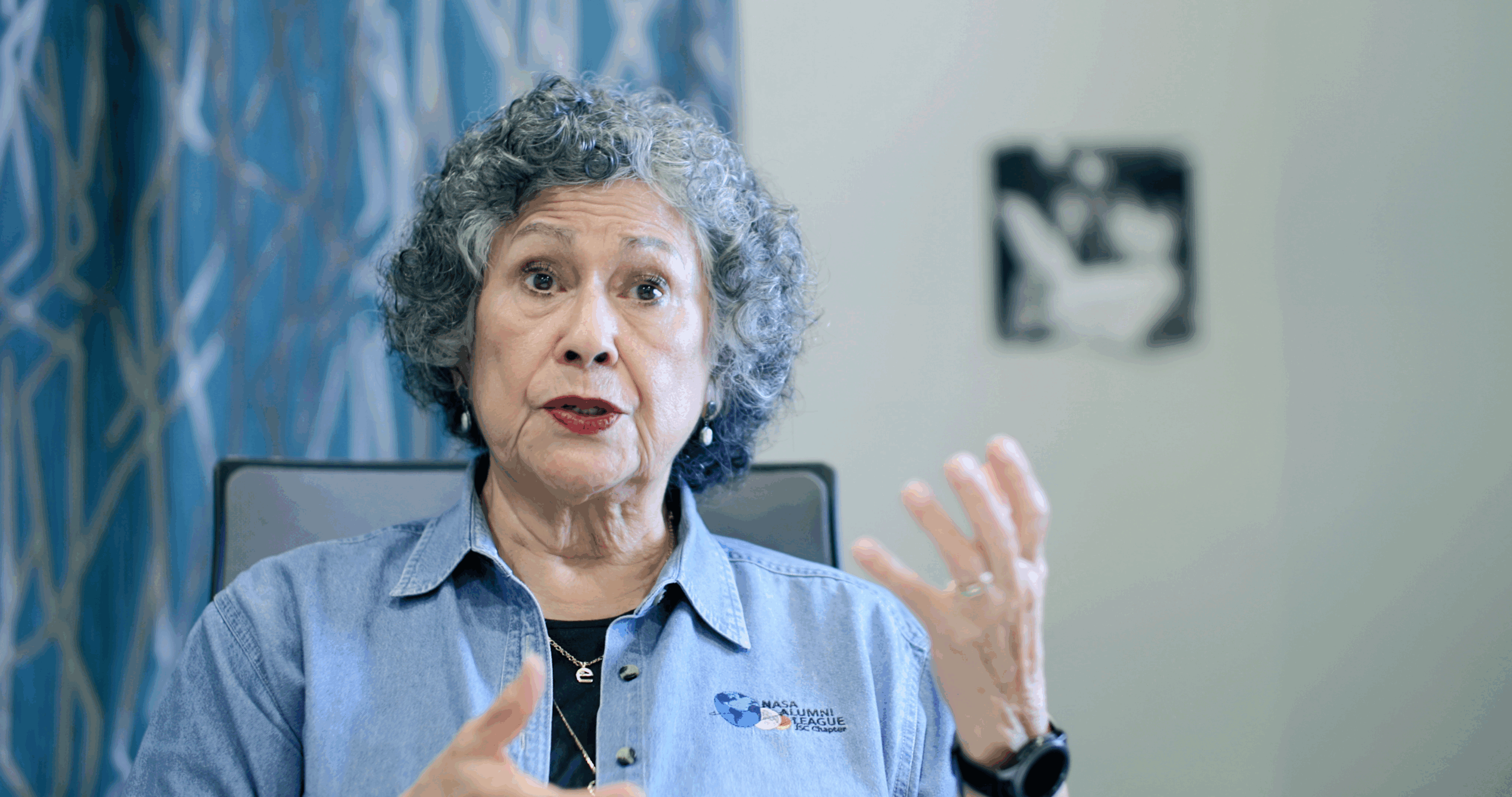
In 1964, Estella Gillette was just out of high school, newly naturalized as a U.S. citizen, and walking through the doors of NASA’s Manned Spacecraft Center in Houston — the beating heart of the Gemini program. What she found was a workplace that looked nothing like the world she came from: “It was mostly men,” she said with a smile. “White shirts, skinny ties, pocket protectors — the whole stereotype was true. The women you saw were secretaries or clerks. They gave me a desk and said, ‘Have a good time.’ That was my orientation.”
She may have been hired as a clerk, but Estella would go on to witness — and quietly shape — six decades of NASA history, rising through the ranks to become Deputy for External Relations and later President of the NASA Alumni League’s Johnson Space Center Chapter. Her story is a living thread through America’s journey to the Moon and beyond.
The “Sixties Chicks” and the Hidden Backbone of NASA
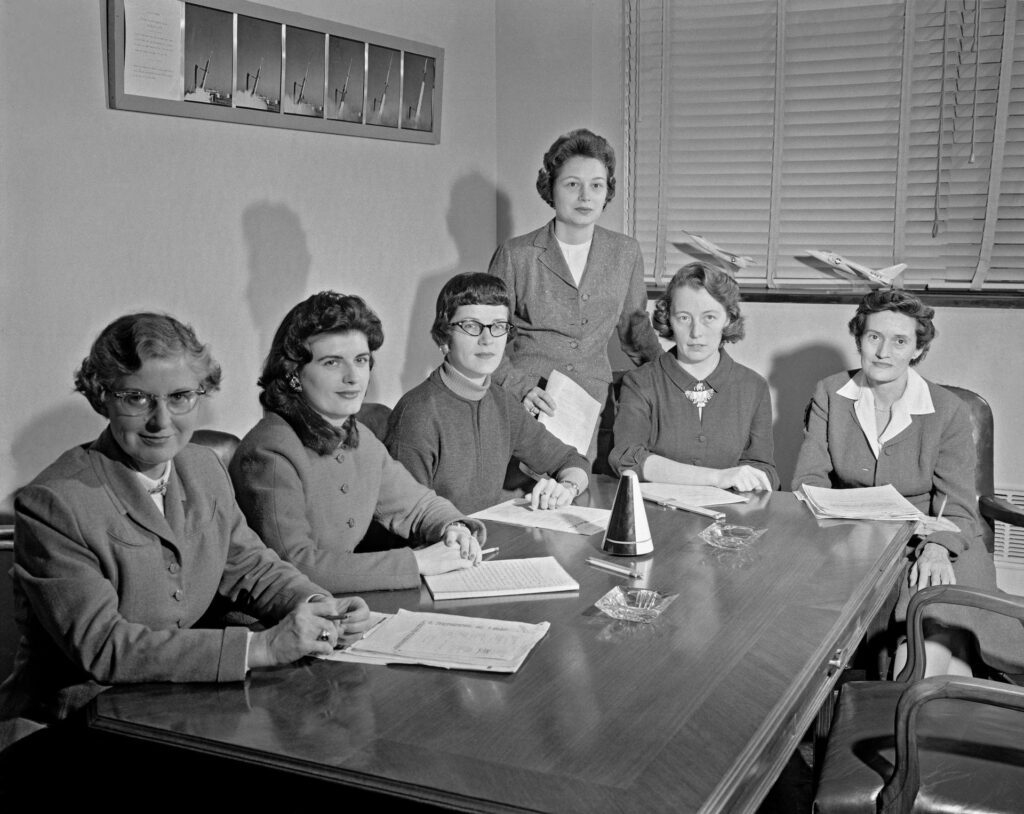
Estella was one of the original members of the “Sixties Chicks” — a community of more than 300 women who joined NASA during the Apollo buildup. The group was formed by Teresa Sullivan, Dawn Hoyle, and Maureen Bowen and Mary Lopez (both now in the afterlife). “It wasn’t about going to the Moon,” Estella said. “We just had a job to do. We typed, answered phones, made coffee, whatever it took. But the engineers depended on us for everything that wasn’t their job. We were their support system.”
Decades later, reflecting on that era, she adds, “We were the wind beneath their wings” — the men who landed on the Moon.
Inside the Rooms Where Apollo Took Shape
When Estella first began sitting in on meetings as an executive secretary, she found herself surrounded by legends. “Ashtrays on the table, smoke in the air, men like Gene Kranz and Cliff Charlesworth running the show,” she said. “I didn’t understand all the technical talk, but I could feel the energy. You knew something big was happening.”
That energy — that relentless focus on mission — defined NASA’s culture for decades. “Everything was about the mission,” she explained. “The objectives were clear. The attitude was: we’re going, nothing will stop us. That’s why it worked.”
Selecting and Supporting the Astronauts Who Led America Forward
Years later, Estella would serve on NASA’s Astronaut Selection Board — after 1978. “I wasn’t on Judy Resnik’s 1978 selection board,” she clarifies, “but I did work with her when I joined the Astronaut Office in 1983.” The traits she looked for went beyond technical brilliance. “It wasn’t just skill,” she said. “We looked for people who could blend in, who could be team players. You’d be surprised how many played in bands or grew up on farms — people who could think, move, and adapt.”
Breaking Barriers Before They Had Names
When asked about being a Latina woman at NASA in the 1960s, Estella paused thoughtfully. “Someone once told me I was only hired because I was Mexican,” she recalled. “So I asked my boss, Cliff Charlesworth, about it. He said, ‘Babe, I’m from Mississippi. You think I care about that?’ That was my moment of clarity. I knew I belonged.”
As the agency evolved, she became part of a cultural transformation. “By the 1970s, affirmative action changed how we recruited,” she said. “And when management was finally ready, I was asked by the HR director to lead a committee to study the feasibility of on-site child care. Even the union had been asking for a long time. We knew management was ready — and we got it done.”
From the Moon to the Classroom
Even while working full-time, Estella attended night school for decades, eventually earning her doctorate after retirement. “NASA inspired me to keep learning,” she said. “When I was 35, I was working on astronaut selection and realized every astronaut had a degree — and I didn’t. So I made it my goal. I got my bachelor’s just before turning 41.”
That persistence shaped how she viewed NASA’s commitment to education. “NASA always supported development,” she said. “They paid for courses, gave us flexibility. It was never just about the next mission — it was about developing people.”
Carrying Apollo’s Lessons into Artemis
When asked if she sees Apollo’s spirit in Artemis, Estella didn’t hesitate. “The excitement is the same,” she said. “Now we have the knowledge base, but the courage — that’s still there. I saw the new astronauts introduced recently, and it felt just like the 1960s again. The applause, the awe, the belief that we can do it.”
And when Gene Kranz’s phrase “Tough and Competent” came up, she nodded knowingly. “You can’t melt down when something bad happens. We lived through Challenger, Columbia, Apollo 1 — and we carried on. That’s what it means to be tough and competent.”
A Legacy of Humanity and Hope
Now, as President of the NASA Alumni League’s JSC Chapter, Estella leads more than 800 retired NASA professionals in mentoring students and sharing the agency’s legacy. “We represent every discipline and every era,” she said. “We keep mentoring because one day we won’t be here — but the lessons we learned will be.”
Looking back on her 60-year journey, she sums it up simply:
“Little did I know in 1964 what I was walking into. Every time I look back, I think — wow.”
Support the Film
Help us tell the stories of space pioneers like Estella Gillette.
• Visit BeforeTheMoonFilm.com
• Support the film through our donation page
• Follow us on Facebook: facebook.com/BeforeTheMoonFilm
Because before we go forward… we need to remember who got us here.


Leave a Reply to Estella Hernández Gillette, Ed.D. Cancel reply